Keyboard shortcuts
- J: Next chapter
- K: Previous chapter
- T: Toggle table of contents
- Shift+S: Share book
- +: Increase font size
- -: Decrease font size
- Escape: Close modals
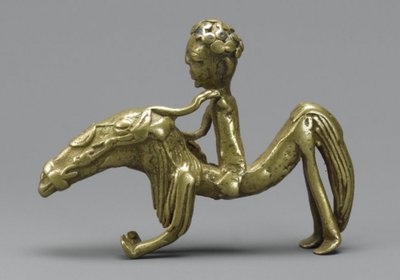
Abrammuo: The Akan Goldweights, Proverbial Wisdom, and the Art of Measuring Value in Pre-Colonial Ghana
↓Chapter 1
Gold Dust and Brass: The Origins of the Weight System (c. 1400-1600)
Long before European ships appeared off the Gold Coast, the Akan peoples had developed one of the most sophisticated systems of commercial measurement in pre-colonial Africa. The abrammuo (singular: mrammuo) — small brass weights used to measure gold dust (sika futuro) in trade — emerged around 1400 AD among the forest-dwelling Akan, coinciding with the expansion of gold mining in the Birim, Offin, and Pra river valleys. An estimated four million goldweights were cast between 1400 and 1900 by the Ashanti and Baule ethnic groups alone, making them perhaps the most prolific tradition of small-scale metal sculpture in African history.
The earliest weights were geometric: pyramids, cubes, cylinders, discs, and stepped forms, cast using the lost-wax (cire perdue) method. Goldsmiths (adwumfo) carved a beeswax model, encased it in clay, heated it to melt the wax out, and poured molten brass (an alloy of copper and zinc, often recycled from European trade goods — manillas, basins, and later cartridge casings) into the mould. The precision was remarkable: the Akan system had over sixty standardised values, ranging from weights as small as 0.04 grams to heavy trade weights exceeding 2,000 grams. A complete set of weights was a prerequisite for any man entering trade; newly married men received a starter set as a wedding gift, signalling their readiness for commercial life.
The weight system tracked two parallel standards: the local Akan system based on the taku seed (Abrus precatorius, averaging 0.13g) and, after Portuguese contact in 1471, an adapted system that accommodated European ounce and troy standards. The goldsmith had to judge the exact amount of molten metal required; if the casting was too heavy, holes were drilled to remove brass, and if too light, small nuggets were soldered on — evidence of this fine-tuning survives on thousands of extant weights.
About This Book
"Abrammuo: The Akan Goldweights, Proverbial Wisdom, and the Art of Measuring Value in Pre-Colonial Ghana" offers a multifaceted exploration of the Akan goldweight tradition, revealing how these seemingly simple brass objects served as far more than just tools for measuring gold dust. For over five centuries, from approximately the 15th to the late 19th centuries, abrammuo functioned as a complex system of communication, law, philosophy, and visual art within Akan society. The book meticulously examines the production, usage, and social significance of goldweights, delving into their diverse forms, ranging from representational figures of animals, humans, and objects to abstract geometric shapes. A central argument of the book is that each goldweight embodies an Akan proverb, folktale, or philosophical principle. Through careful analysis, the book deciphers the meanings encoded within these miniature sculptures, illuminating the Akan worldview and its emphasis on ethical conduct, social harmony, and the importance of collective memory. Readers will learn how the Akan people used these weights to negotiate trade, settle disputes, and transmit cultural values across generations. The book highlights the role of goldweights in the economic and political landscape of pre-colonial Ghana, specifically within the powerful Akan states such as Asante, Fante, and Akwamu. It examines how the gold trade influenced inter-tribal relations and European interactions. The book also addresses the decline of the goldweight tradition with the increasing influence of European currency and colonial rule. The impact of this transition on Akan social structures and traditional knowledge systems is carefully explored. The reader gains insight into the lives of Akan traders, artisans, and chiefs who relied on the goldweight system and how their lives were impacted during this disruptive period. Through detailed descriptions, historical accounts, and visual documentation, the book presents a comprehensive picture of the Akan goldweight tradition as a unique and invaluable cultural legacy.
About the Author
The study of Akan goldweights has been shaped by contributions from several scholars and cultural figures, building a robust foundation for understanding their significance. Early ethnographic accounts by colonial administrators and missionaries provided initial, albeit often biased, descriptions of the goldweight system. However, the work of scholars like R.S. Rattray, who documented Akan customs and beliefs in the early 20th century, offered more nuanced insights. More recently, scholars such as Dr. Timothy Garrard and Dr. Kwesi Anquandah have made significant contributions to our understanding of Akan material culture and the role of goldweights in trade and social life. The ongoing research by Ghanaian academics at institutions like the University of Ghana and the Kwame Nkrumah University of Science and Technology continues to enrich and refine our understanding of this unique tradition. This book builds upon this rich tradition of scholarship, synthesizing existing knowledge and offering new interpretations of the abrammuo and their place in Akan history.
Key Themes
- Akan Proverbs
- Economic Exchange
- Material Culture
- Visual Communication
- Pre-Colonial Trade
- Cultural Preservation
Why This Matters
The Akan goldweight tradition provides a unique window into the intellectual, artistic, and economic sophistication of pre-colonial Ghanaian society. It challenges Eurocentric narratives that often overlook the complex systems of governance, trade, and knowledge that existed in Africa prior to European intervention. For the Ghanaian diaspora, understanding the abrammuo offers a tangible connection to their ancestral heritage, demonstrating the ingenuity and cultural richness of their forebears. It is crucial for African and African diaspora students as the intricate network of symbols and stories encapsulated within these weights highlights the importance of visual literacy, cultural encoding, and the power of proverbs in shaping social norms. This knowledge empowers individuals to critically examine historical narratives and appreciate the diversity of African intellectual traditions, fostering a deeper sense of identity and pride.
Historical and Cultural Context
The Akan goldweight tradition exists within a broader context of African systems of value exchange and artistic expression. Similar forms of currency and symbolic objects were used in other parts of the continent, showcasing the diverse approaches to trade and communication. Within the Sankofa Library, this book complements other resources on African art, economic history, and oral traditions. Studying the goldweights alongside texts on Asante history or West African trade routes provides a more complete understanding of the interconnectedness of African societies and their contributions to global history. The book is a reminder that money and value are always socially constructed, and thus reflect the norms and values of a society.