Keyboard shortcuts
- J: Next chapter
- K: Previous chapter
- T: Toggle table of contents
- Shift+S: Share book
- +: Increase font size
- -: Decrease font size
- Escape: Close modals
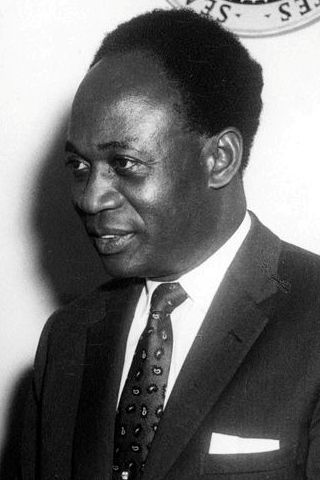
Akosombo's Enduring Legacy: The Volta River Project and the Forging of Ghana's Industrial Destiny
- Kwame Nkrumah
- Akosombo Dam
- Volta River Authority
- Lake Volta
- VALCO
- Hydroelectric Power
- Industrialization
- Resettlement
- Tema
- Ghana's First Republic
- Volta Basin
Chapter 1
The Dream of a Nation: Pre-Independence Visions and the Volta River Project's Genesis
Explores the early proposals and colonial-era studies for harnessing the Volta River, culminating in the project's adoption as a cornerstone of Nkrumah's independent Ghana's development strategy.
About This Book
"Akosombo's Enduring Legacy" delves into the multifaceted story of the Volta River Project (VRP), a transformative undertaking that reshaped Ghana's economic and social landscape in the post-independence era. The book meticulously examines the project's origins, tracing its conceptualization back to colonial-era assessments of the Volta River's hydroelectric potential and its evolution into a centerpiece of Kwame Nkrumah's ambitious industrialization agenda. It explores the intricate negotiations with international actors, including the World Bank, the United States, and British aluminum companies, highlighting the complex interplay of national aspirations and global geopolitical forces that shaped the VRP. The narrative intricately details the immense engineering feat involved in constructing the Akosombo Dam -- a monument of concrete and human ingenuity -- and the formation of Lake Volta, the world's largest artificial lake by surface area. The book doesn't shy away from addressing the project's social and environmental consequences, including the displacement of thousands of people from their ancestral lands, the disruption of traditional livelihoods, and the ecological changes wrought by the dam's construction. It analyzes the resettlement programs designed to mitigate these impacts, evaluating their successes and shortcomings. Furthermore, the book investigates the utilization of the Akosombo Dam's electricity generation capacity, particularly in powering the VALCO aluminum smelter -- a cornerstone of Nkrumah's industrial vision. It examines the economic benefits derived from the VRP, including increased electricity access and the expansion of manufacturing industries, while also critically assessing its long-term sustainability and its contribution to Ghana's overall development trajectory. The narrative further illuminates the legacy of the project after the fall of Nkrumah’s government, highlighting how subsequent administrations have managed and expanded upon the VRP’s infrastructure. Readers will gain a comprehensive understanding of the Akosombo Dam's enduring impact on Ghana's economy, society, and environment, along with its place in the nation's collective memory.
About the Author
Scholarship on the Akosombo Dam and the Volta River Project is rich and varied, drawing from economics, history, sociology, and environmental studies. Initial reports often focused on the project's engineering and economic promise. Later studies, particularly in the 1980s and 1990s, offered more critical perspectives, examining its social and environmental consequences. Groundbreaking work by scholars like Professor Emmanuel Adjei, whose detailed economic analyses of the VRP remain definitive, and anthropologist Dr. Akosua Ampofo, who documented the experiences of those displaced by Lake Volta, have shaped our understanding. Contemporary researchers continue to explore the project's long-term impact on Ghana's energy sector and its role in regional development, ensuring a continuous re-evaluation of Akosombo’s complex legacy.
Key Themes
- Industrialization
- National Development
- Environmental Impact
- Displacement and Resettlement
- Cold War Politics
- Neocolonialism
Why This Matters
The Akosombo Dam's story is crucial for understanding Ghana's post-colonial trajectory and the broader dynamics of development in Africa. It embodies the aspirations of newly independent nations to harness their resources for industrial progress, while also highlighting the challenges and trade-offs inherent in large-scale development projects. Examining the dam's social and environmental impacts provides valuable lessons for sustainable development practices today.
For the African diaspora and students, this story offers a window into the complexities of nation-building in Africa, the legacies of colonialism, and the ongoing struggle for economic self-determination. It prompts reflection on the choices nations make in pursuit of progress and the importance of considering the long-term consequences of development initiatives. The Akosombo Dam stands as a powerful symbol, a testament to both the possibilities and the pitfalls of modernization.
Historical and Cultural Context
The Akosombo Dam must be understood within the context of Pan-Africanism and Nkrumah's vision for a unified and industrialized Africa. His ambition to use the dam's power to fuel a continent-wide industrial revolution connects to similar projects and dreams across Africa during that era -- from the Aswan Dam in Egypt to various hydroelectric projects across the Congo River. Placing the Akosombo project within the Sankofa Library allows for its comparison with other nation-building projects, examining the diverse approaches to development and their respective outcomes.
Sources & References
- Kitson, Albert E. (1925). Report on the Volta River. Gold Coast Geological Survey.
- Tsikata, Dzodzi. (2006). Living in the Shadow of the Large Dams: Long Term Responses of Downstream and Lakeside Communities of Ghana's Volta River Project. Brill.
- Miescher, Stephan F. (2014). "Nkrumah's Baby": the Akosombo Dam and the Dream of Development in Ghana, 1952-1966. Water History, 6(4).
- Gyau-Boakye, P. (2001). Environmental Impacts of the Akosombo Dam and Effects of Climate Change on the Lake Levels. Environment, Development and Sustainability, 3(1).
- Hart, David. (1980). The Volta River Project: A Case Study in Politics and Technology. Edinburgh University Press.
- Nkrumah, Kwame. (1961). I Speak of Freedom: A Statement of African Ideology. Heinemann.
- Hilton, T. E. (1966). The Volta Resettlement Project. Journal of Tropical Geography, 24.