Keyboard shortcuts
- J: Next chapter
- K: Previous chapter
- T: Toggle table of contents
- Shift+S: Share book
- +: Increase font size
- -: Decrease font size
- Escape: Close modals
Galamsey: Ghana's Golden Curse — Illegal Mining, Environmental Ruin, and the Fight for Water (2000-2025)
↓Chapter 1
From Akan Goldfields to 'Gather Them and Sell': The Deep Roots of Artisanal Mining
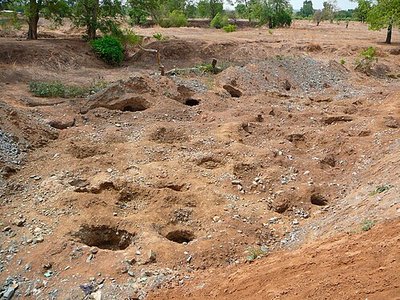
The word 'galamsey' derives from the English phrase 'gather them and sell,' corrupted through local usage into a single Ghanaian English term that has become synonymous with illegal small-scale gold mining. But artisanal gold mining in Ghana predates European contact by centuries. The Akan peoples of the forest zone developed sophisticated alluvial mining techniques — panning river sediments, digging shallow pits, and processing gold-bearing ore with stone tools — as early as the 10th century. Arab geographer al-Bakri wrote in 1067 of the 'land of gold' south of the Sahara, and when Portuguese traders arrived at Elmina in 1471, they found a thriving gold economy: historian John Vogt estimated 24,000 ounces annually flowed from Akan mines to the coast. The Gold Coast colony derived its very name from this abundance. The colonial-era Concessions Ordinance of 1900 and the subsequent Minerals Act of 1962 vested all mineral rights in the state, effectively criminalizing traditional mining practices that had sustained communities for generations. After structural adjustment in the 1980s, the PNDC government passed the Small-Scale Gold Mining Law (PNDCL 218) in 1989, creating a legal framework for small-scale operations. Licensed miners received 25-acre concessions and access to government-regulated mercury. However, the licensing system was slow, corrupt, and inaccessible to most rural miners — a licence could take 18 months and cost thousands of cedis in bribes. By the 2000s, a parallel illegal industry had exploded, fuelled by rising global gold prices — from $271/oz in 2001 to over $1,900/oz by 2023 and surpassing $2,500/oz by 2025 — and the arrival of Chinese mining syndicates bringing excavators, chanfan sluice machines, and industrial-scale ambition to operations that were 'small-scale' in name only. The Minerals Commission estimates that small-scale mining (legal and illegal combined) accounts for approximately 35-40% of Ghana's total gold output, up from just 8% in 2000.
About This Book
"Galamsey: Ghana's Golden Curse" meticulously documents the environmental and social devastation wrought by illegal small-scale gold mining, known locally as "galamsey," in Ghana from 2000 to 2025. The book chronicles how this practice, driven by poverty, unemployment, and the allure of quick wealth, has transformed from a localized problem into a national crisis, threatening Ghana's water resources, agricultural lands, and public health. The narrative begins with an overview of Ghana's rich gold mining history, highlighting the shift from formal large-scale mining to the proliferation of informal "galamsey" operations in the late 20th and early 21st centuries. It examines the economic factors fueling the industry, including rising gold prices, inadequate regulation, and corruption within government institutions. The book specifically focuses on the influx of foreign nationals, particularly from China, who have become heavily involved in galamsey, often employing sophisticated equipment and environmentally destructive techniques like the use of mercury and cyanide in rivers and forests. Key events covered include government crackdowns on galamsey operations, such as Operation Vanguard and Operation Halt, and their limited effectiveness due to corruption and the sheer scale of the problem. The book also examines the role of traditional authorities and local communities, some of whom have become complicit in galamsey activities while others actively resist them. The book explores the devastating environmental consequences, including deforestation, soil erosion, water pollution, and the loss of biodiversity. It details the health impacts on communities living near galamsey sites, including mercury poisoning, respiratory illnesses, and waterborne diseases. The author also analyzes the social impacts, such as increased crime rates, prostitution, and the displacement of farming communities. Ultimately, "Galamsey: Ghana's Golden Curse" serves as a warning about the urgent need for sustainable mining practices, effective governance, and community involvement to protect Ghana's natural resources and ensure a healthy future for its citizens. Readers will learn about the complex interplay of economic, social, and environmental factors driving the galamsey crisis, the challenges of regulating informal mining, and the potential solutions for addressing this critical issue.
About the Author
The study of Ghana's mining industry, particularly the environmental and social impacts of "galamsey," has a rich tradition. Scholars like Dr. Audrey Gadzekpo have examined the role of media in shaping public discourse around galamsey. Legal scholars, such as those at the University of Ghana's Faculty of Law, have analyzed the effectiveness of Ghana's mining laws and regulations. Anthropologists have studied the social dynamics of galamsey communities, exploring the motivations, livelihoods, and power structures within them. Environmental scientists at institutions like the Council for Scientific and Industrial Research (CSIR) have documented the extent of environmental damage caused by galamsey and explored remediation strategies. This book draws upon this diverse body of scholarship, synthesizing research from various disciplines to provide a comprehensive account of the galamsey crisis.
Key Themes
- Illegal mining
- Environmental degradation
- Water scarcity
- Governance and corruption
- Economic development
- Social inequality
- Chinese involvement
Why This Matters
The "galamsey" crisis is a crucial lens through which to understand contemporary challenges facing Ghana and many other African nations rich in natural resources. It exemplifies the tension between economic development and environmental sustainability, highlighting the need for responsible resource management and equitable distribution of benefits. The story of galamsey reflects a legacy of colonial extraction and neo-colonial exploitation that continues to shape resource governance in Africa.
For the African diaspora, this topic resonates deeply, connecting to historical patterns of resource exploitation and the ongoing struggle for self-determination. Students can learn valuable lessons about environmental justice, sustainable development, and the complexities of globalization. The case of galamsey serves as a cautionary tale about the unintended consequences of unchecked economic growth and the importance of community participation in decision-making processes. Addressing this crisis requires a multi-faceted approach, including strengthening governance, promoting alternative livelihoods, and empowering local communities to protect their natural resources.
Historical and Cultural Context
The galamsey phenomenon is inextricably linked to the broader history of gold mining in Ghana, dating back to pre-colonial times when Akan kingdoms like Ashanti thrived on the gold trade. The arrival of Europeans intensified mining activities, leading to the establishment of large-scale mining operations under colonial rule. After independence, Ghana nationalized some mining companies, but the sector has remained largely dominated by foreign interests. The rise of galamsey can be seen as a response to the perceived inequalities in the formal mining sector and a desire by local communities to benefit directly from the country's mineral wealth. This narrative also connects to similar struggles for resource control in other African nations, highlighting the need for a more equitable and sustainable model of resource governance across the continent.