
Keyboard shortcuts
- J: Next chapter
- K: Previous chapter
- T: Toggle table of contents
- Shift+S: Share book
- +: Increase font size
- -: Decrease font size
- Escape: Close modals
Chapter 1
From BusyInternet to iSpace: The Pioneers of Ghana's Digital Revolution (2000-2012)
Ghana's tech ecosystem traces its origins to January 2001, when Mark Davies opened BusyInternet in Accra's Kokomlemle neighbourhood — a 160-computer cybercafe, business incubator, and training centre that became West Africa's largest internet facility. At a time when Ghana had fewer than 30,000 internet users (0.15% penetration), BusyInternet charged one cedi per hour and introduced thousands of Ghanaians to the web. The facility hosted the country's first tech meetups and inspired a generation of entrepreneurs. In 2005, Bright Simons founded mPedigree in Accra, creating a mobile phone-based system allowing consumers to verify pharmaceutical authenticity by texting a scratch-off code — a solution to the WHO estimate that 30% of medicines in developing countries are counterfeit. mPedigree won the 2013 Global Social Entrepreneurship Competition (Washington University) and expanded to Nigeria, India, and Kenya. The Meltwater Entrepreneurial School of Technology (MEST) opened in 2008 in East Legon, Accra, founded by Norwegian tech entrepreneur Jorn Lyseggen with an initial $20 million endowment. MEST offers a fully sponsored one-year training programme selecting 60 entrepreneurs annually from across Africa, combining software engineering, business, and communications training with seed funding up to $100,000 per venture. By 2025, MEST had invested in over 100 startups across Ghana, Nigeria, Kenya, and South Africa. Ashesi University, founded in 2002 by Patrick Awuah Jr. (a former Microsoft programme manager who returned from Seattle), brought Silicon Valley pedagogy to Berekuso, training engineers with an honour code and liberal arts curriculum — 90% of graduates are employed within six months. iSpace, Ghana's first dedicated tech hub, launched in 2011 in Osu, providing co-working space and mentorship to early-stage startups.
About This Book
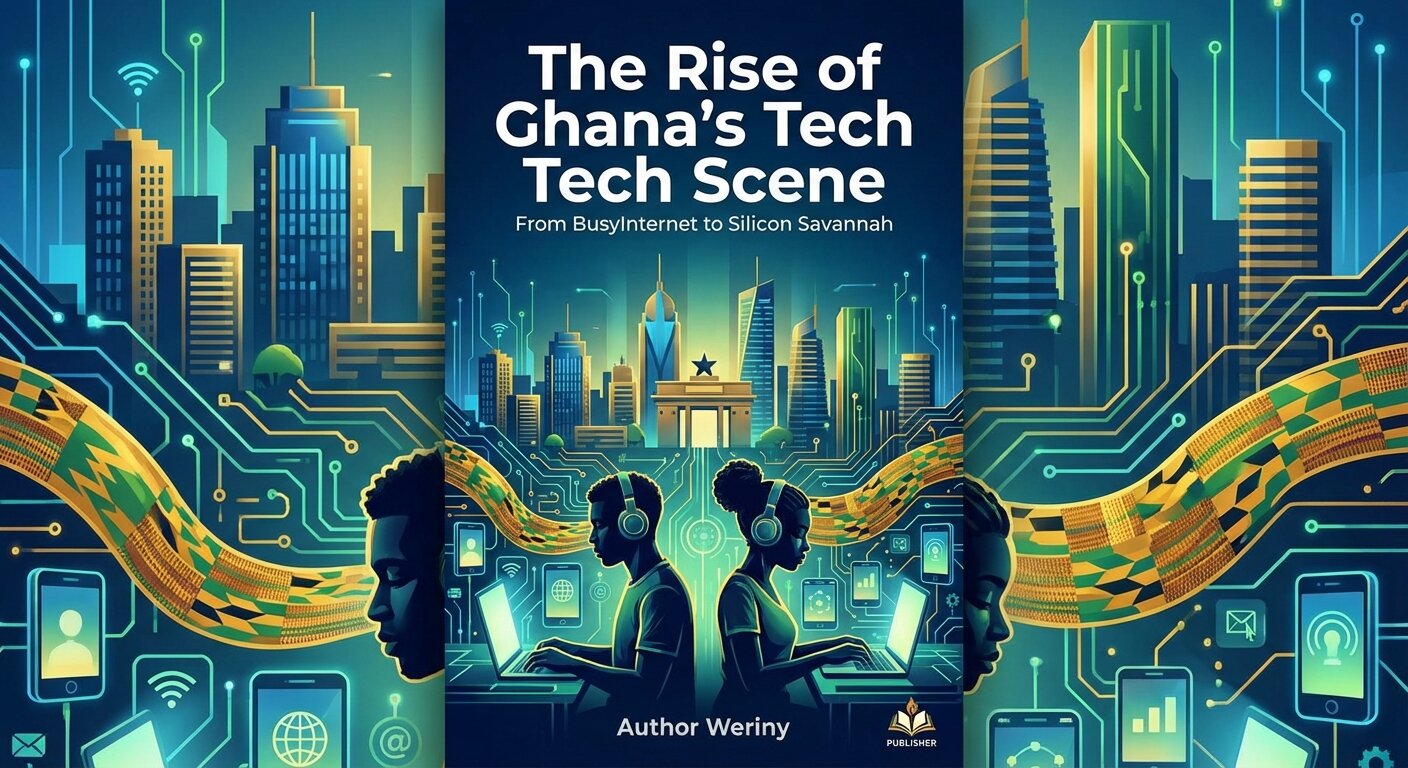
"The Rise of Ghana's Tech Scene: From BusyInternet to Silicon Savannah" chronicles the remarkable ascent of Ghana as a leading technological hub in West Africa. The book meticulously traces the development of Ghana's tech ecosystem, beginning with the foundational role of BusyInternet in the early 2000s -- a pivotal internet service provider that introduced many Ghanaians to the digital world and laid the groundwork for future innovation. It examines the establishment of key institutions like the Meltwater Entrepreneurial School of Technology (MEST), a pan-African training program which has nurtured countless tech entrepreneurs, and iSpace, one of Accra's first and most influential tech hubs, providing crucial co-working spaces, mentorship, and networking opportunities. A central focus is the transformative impact of mobile money, particularly MTN Mobile Money and AirtelTigo Cash, on financial inclusion and economic empowerment. The book details how mobile money circumvented traditional banking limitations, allowing millions of Ghanaians, especially in rural areas, to participate in the digital economy. It explores the regulatory landscape that enabled mobile money to flourish and its subsequent effect on e-commerce and digital payment systems. Furthermore, the book paints a vivid picture of Accra's evolving startup culture, highlighting the challenges and triumphs of Ghanaian tech entrepreneurs. It discusses the role of venture capital, angel investors, and government initiatives in supporting startups, while also acknowledging the persistent hurdles of infrastructure limitations, access to capital, and talent retention. Through case studies of successful Ghanaian tech companies, the book analyzes their business models, market strategies, and contributions to job creation and economic growth, demonstrating Ghana's journey towards becoming a significant player in Africa's digital transformation. It further emphasizes the importance of local solutions addressing local problems, a driving force behind the most impactful technologies emerging from Ghana.
About the Author
The story of Ghana's tech scene is relatively recent, and much of its documentation is found in contemporary journalism, industry reports, and academic papers. While no single "traditional historian" might be credited, many business analysts, technologists, and social scientists have contributed to chronicling this evolution. Dr. Dorothy Gordon, a leading voice on technology and development in Africa, and organizations like the Ghana Chamber of Technology, have produced valuable reports and analyses. Moreover, the oral histories of entrepreneurs and tech leaders -- recorded in podcasts, interviews, and blog posts -- form a vital part of this narrative. Future historians will rely on these sources to understand the intricacies of Ghana's digital revolution. This work is situated within that emerging tradition of documenting the growth of African technological innovation from the ground up.
Key Themes
- Digital Transformation
- Entrepreneurship
- Financial Inclusion
- Technological Innovation
- Mobile Money
- Startup Ecosystems
Why This Matters
Understanding the rise of Ghana's tech scene is crucial for grasping the nation's modern economic and social development. It showcases how a developing country can leverage technology to overcome obstacles and achieve significant progress. For the diaspora, this narrative offers a compelling example of Ghanaian ingenuity and resilience, highlighting opportunities for investment, collaboration, and knowledge transfer. For students, this story provides valuable insights into the dynamics of innovation, entrepreneurship, and the impact of technology on society. It demonstrates how technology can be a powerful tool for addressing local challenges and driving sustainable development, inspiring future generations of African innovators. This also helps to deconstruct narratives of Africa as solely a recipient of technology, showcasing its agency in creating and adapting technology for its own needs.
Historical and Cultural Context
The rise of Ghana's tech scene can be understood within the broader context of Africa's "Silicon Savannah," a term used to describe the continent's burgeoning technology ecosystems. This story is intrinsically linked to broader Pan-African efforts to build indigenous industries and foster self-reliance. In the Sankofa Library, this book connects to narratives of economic development and post-colonial nation-building, showcasing a modern chapter in Ghana's long history of innovation and adaptation. It also resonates with themes of infrastructure development and the quest for greater economic autonomy within the global landscape.
Sources & References
- TechCabal. The Dawn of Ghana Tech Ecosystem. July 2021.
- Quartz Africa. Ghana Budding Health Tech Sector Getting Global Recognition. 2019.
- MIT Technology Review. Innovators Under 35: Bright Simons. 2013.
- US International Trade Administration. Ghana Strategic Technologies Report. 2024.
- World Bank. Ghana Digital Economy Diagnostic. 2020.