
Keyboard shortcuts
- J: Next chapter
- K: Previous chapter
- T: Toggle table of contents
- Shift+S: Share book
- +: Increase font size
- -: Decrease font size
- Escape: Close modals
Chapter 1
Part 1
In the deepest corners of the Volta Region in Ghana, an ancient and highly controversial practice persisted long into the modern era. It was known as Trokosi, which translates roughly to "slaves of the gods." Under this system, young virgin girls, sometimes as young as seven years old, were offered to traditional shrines by their families. They were given as living sacrifices to atone for a crime, often something as minor as petty theft, committed by a relative. The belief was that unless the gods were appeased with human collateral, a curse would ravage the entire family.
For decades, the girls who were surrendered to the shrines lived in conditions of forced labor, psychological control, and sexual servitude to the shrine priests. They received no formal education and could not leave the shrine without permission. If a Trokosi died or escaped, her family was obligated to replace her with another virgin girl, ensuring that the debt to the gods spanned generations. This narrative examines the dark realities of the Trokosi system, the complex cultural beliefs that sustained it, and the heroic, multi-decade struggle by human rights activists, religious leaders, and the women themselves to dismantle the practice and secure their liberation.
To understand how the Trokosi system survived into the 21st century, one must first examine the deep-rooted theological framework of the Ewe communities where the practice originated. In this traditional worldview, the spiritual and physical realms are not separated. The gods (the *Trowo*) are active participants in daily life. They protect the community, ensure good harvests, and enforce moral codes. When a crime is committed, it is not merely an offense against another person; it is an offense against the moral order established by the gods.
The concept of justice in this system is not punitive in the Western sense; it is restorative. The balance of the universe has been disrupted, and it must be restored through appeasement. While minor offenses could be resolved with offerings of livestock or money, serious transgressions, or repeated offenses by a family line, demanded the highest form of sacrifice: a human life.
However, rather than executing the offender, the family offered a virgin girl to the shrine. She became the living embodiment of their contrition. By dedicating her life to the service of the shrine, she supposedly absorbed the wrath of the gods, shielding her family from spiritual retribution, disease, and sudden death. The tragedy of the system was that the girl who bore the punishment was almost never the person who committed the crime. She was an innocent scapegoat, sacrificed to preserve the social and spiritual equilibrium of the broader community.
About This Book
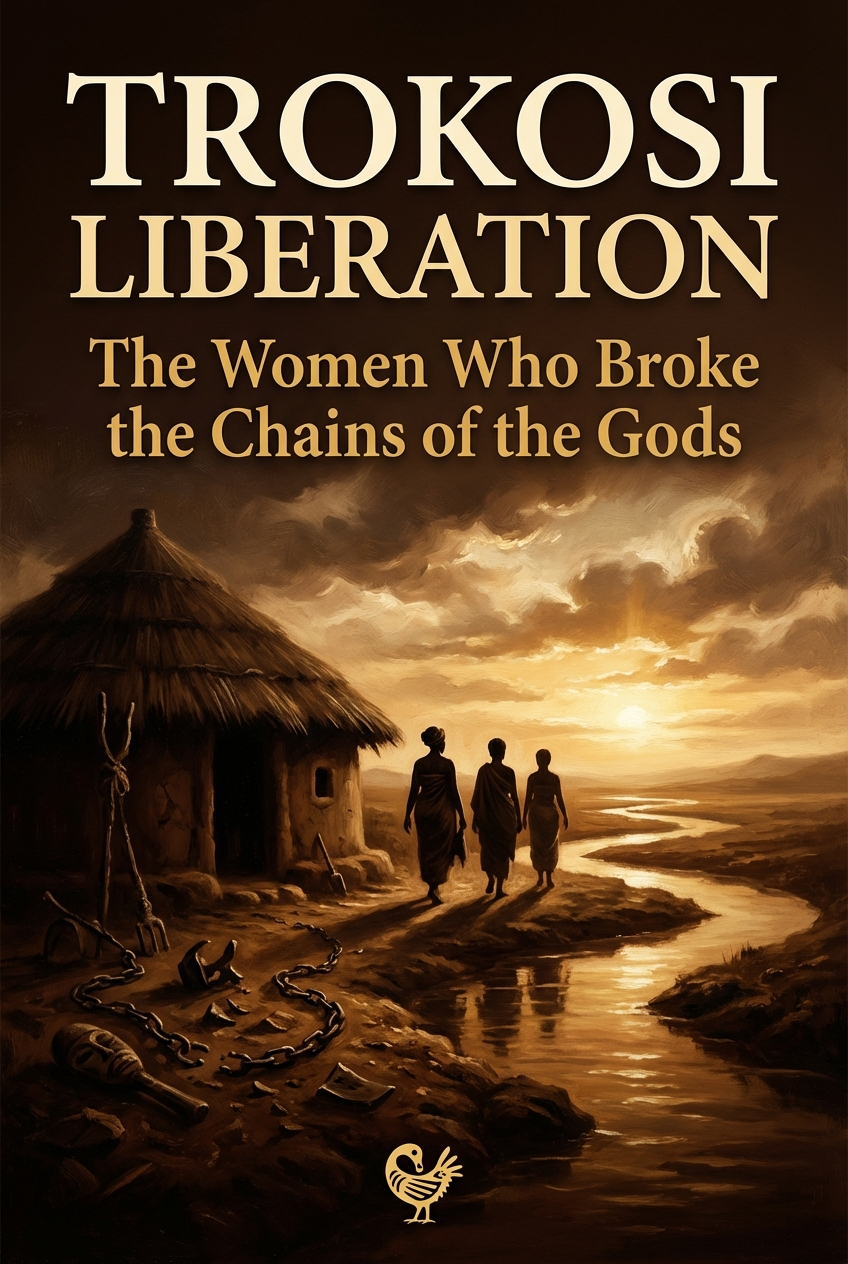
"Trokosi Liberation: The Women Who Broke the Chains of the Gods" offers a harrowing yet ultimately triumphant account of the fight to abolish the Trokosi system in Ghana, a practice prevalent primarily in the Volta Region. This system, deeply rooted in traditional religious beliefs, involved families offering young virgin girls to traditional shrines as atonement for alleged offenses committed by relatives. These girls, known as Trokosi, were essentially enslaved to the priests and shrines, often facing physical abuse, forced labor, and the denial of education and basic human rights. The book dissects the theological justifications used to perpetuate the system, exploring how fear and superstition were manipulated to maintain control over communities. The narrative follows the emergence of courageous activists and organizations, both local and international, who dedicated themselves to liberating Trokosi girls. These individuals faced immense challenges, including resistance from traditional leaders and communities deeply invested in maintaining the status quo. Key figures such as Mama Rose Mensah, a leading anti-Trokosi advocate, and organizations like International Needs Ghana, are highlighted for their relentless efforts to raise awareness, provide sanctuary for rescued girls, and advocate for legal reforms. The book meticulously details the legislative battles fought to outlaw Trokosi, culminating in the Criminal Code amendment of 1998 that officially criminalized the practice. However, the legal victory was only the beginning. The book emphasizes the crucial work of rehabilitation and reintegration, addressing the psychological trauma suffered by Trokosi girls and providing them with education, vocational training, and psychosocial support to rebuild their lives. Readers will gain a profound understanding of the complexities of cultural change, the power of individual and collective action, and the ongoing struggle for human rights in the face of deeply entrenched traditions. The book illuminates the crucial role of education, advocacy, and government intervention in dismantling harmful cultural practices and empowering marginalized communities.
About the Author
The scholarship on Trokosi and related traditional practices in Ghana is a complex tapestry woven from activist accounts, academic research, and journalistic investigations. Early documentation often came from missionaries and colonial administrators, though their perspectives were frequently biased. Contemporary scholarship benefits from the work of Ghanaian academics in sociology, anthropology, and women's studies, who have provided nuanced analyses of the socio-cultural context of Trokosi. Furthermore, the narratives of survivors themselves, often collected and amplified by NGOs, form a crucial source of information. This book, therefore, builds upon decades of research and advocacy, drawing from diverse perspectives to offer a comprehensive understanding of the Trokosi system and the struggle for its abolition. The reliance on both qualitative and quantitative data, including interviews, surveys, and legal documents, strengthens the book's credibility and offers a multifaceted exploration of the topic.
Key Themes
- Trokosi system
- Religious exploitation
- Women's rights
- Child enslavement
- Activism and advocacy
- Legal reform
- Rehabilitation and reintegration
Why This Matters
The story of Trokosi liberation is profoundly significant for understanding Ghanaian and African heritage because it exposes the dark underbelly of certain traditional practices and the urgent need to critically examine cultural norms. It highlights the vulnerability of women and children within patriarchal systems and the potential for religious beliefs to be manipulated for exploitative purposes. Its relevance today lies in its reminder that the fight for human rights is never truly over. Harmful cultural practices persist in various forms across the continent and the world, demanding continued vigilance and advocacy.
For the diaspora, this story offers a complex perspective on African tradition, challenging romanticized notions and encouraging critical engagement with cultural heritage. For students, it provides a valuable case study in social justice, human rights, and the complexities of cultural change, demonstrating the power of activism and the importance of education in dismantling oppressive systems. It demonstrates the agency of Ghanaian people in addressing challenges within their own society.
Historical and Cultural Context
Understanding the Trokosi system requires situating it within the broader context of traditional religious beliefs and practices in West Africa, particularly the prevalence of animistic religions with powerful ancestral spirits and deities. The practice also resonates with other forms of ritual servitude documented throughout the continent. Within the Sankofa Digital Heritage Library, this book connects to themes of social justice, human rights, and the ongoing struggle to reconcile tradition with modernity in post-colonial Africa. It can be understood within the context of modern slavery as well.