Keyboard shortcuts
- J: Next chapter
- K: Previous chapter
- T: Toggle table of contents
- Shift+S: Share book
- +: Increase font size
- -: Decrease font size
- Escape: Close modals
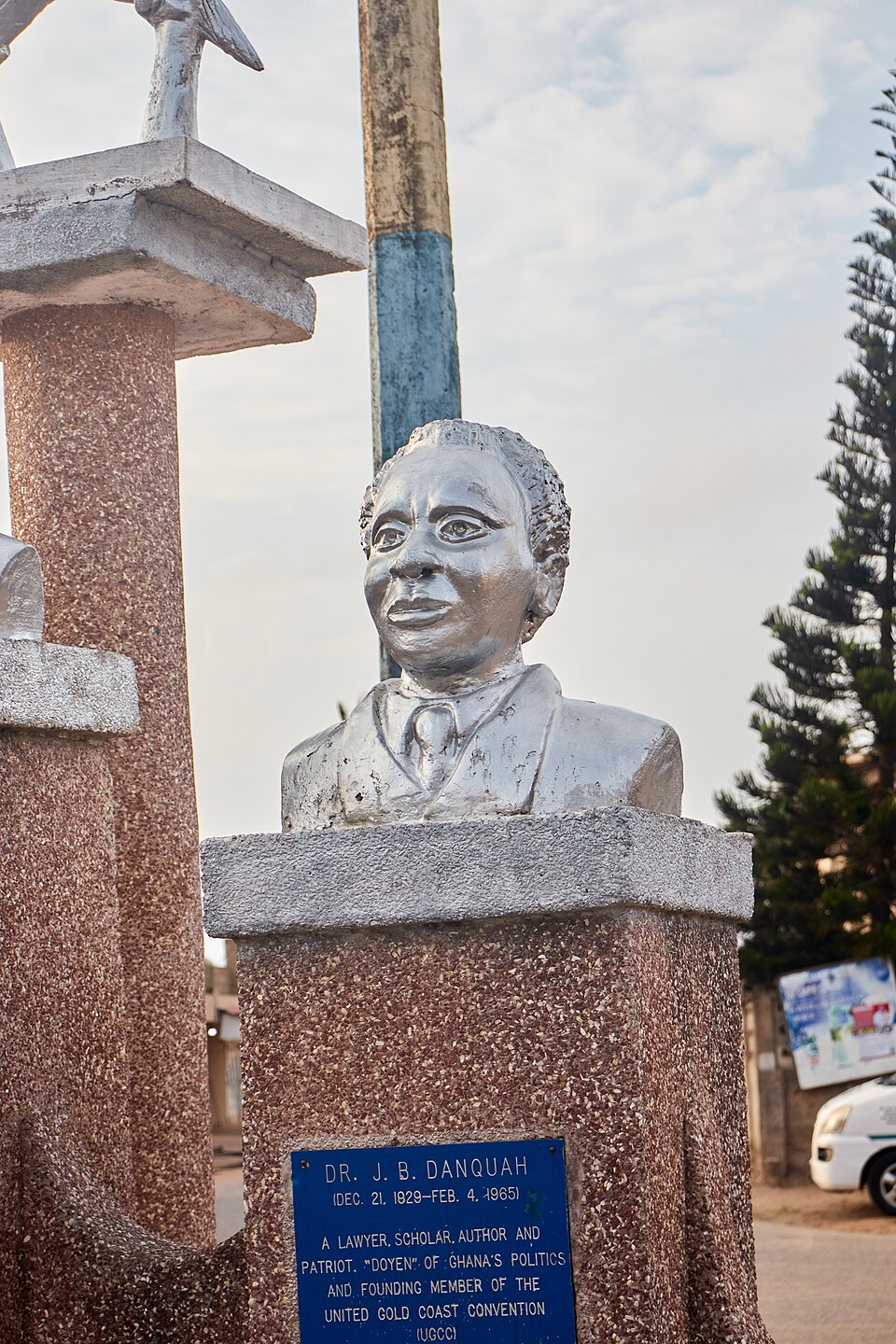
Architects of Destiny: The Danquah-Nkrumah Rivalry and the Ideological Foundations of Ghanaian Independence
- J.B. Danquah
- Kwame Nkrumah
- UGCC
- CPP
- Gold Coast
- Independence Movement
- Pan-Africanism
- Constitutionalism
- Mass Mobilization
- Gold Coast Nationalism
- Political Rivalry
- Positive Action
Chapter 1
The Intellectual Crucible: Early Lives and Shared Aspirations
Explores the early lives, education, and intellectual influences of J.B. Danquah and Kwame Nkrumah, highlighting their common desire for an independent Gold Coast despite their distinct backgrounds and formative experiences. Sets the stage for their eventual collaboration and subsequent divergence.
About This Book
"Architects of Destiny" delves into the intricate dynamics of the Gold Coast's transition from colonial rule to independent nationhood, focusing particularly on the intellectual and political clash between J.B. Danquah and Kwame Nkrumah. The book meticulously examines their contrasting backgrounds, ideological stances, and strategic approaches to achieving self-governance. It details Danquah's deep roots in Akyem Abuakwa chieftaincy, his legal training in London, and his advocacy for a gradual, constitutional path to independence, emphasizing the preservation of traditional Akan institutions within a modern framework. The book also analyzes Nkrumah's transformative experiences in the United States and Britain, his fervent belief in immediate self-government, and his embrace of Pan-Africanism as a driving force for liberation. The narrative traces the formation of the UGCC, the initial hopes for a unified front, and the subsequent schism that led to the creation of Nkrumah's Convention People's Party (CPP). It meticulously dissects the events surrounding the 1948 riots, the Watson Commission, and Nkrumah's imprisonment, highlighting the escalating tensions between the colonial administration and the burgeoning nationalist movement. "Architects of Destiny" further explores the contrasting political strategies employed by Danquah and Nkrumah in the lead-up to independence, including Nkrumah's "Positive Action" campaign, the 1954 and 1956 elections, and the eventual attainment of independence in 1957. Post-independence, the book examines the deepening ideological divide between the two leaders, focusing on their differing visions for the Ghanaian state, their approaches to economic development, and their stances on Pan-African unity. The narrative culminates with an analysis of the political events leading to Nkrumah's overthrow in 1966 and Danquah's death in prison, offering a nuanced understanding of the legacies of these two towering figures and their enduring impact on Ghanaian identity and development. Readers will gain a rich understanding of the complexities of Ghanaian independence, the diverse currents of thought that shaped its trajectory, and the enduring relevance of the Danquah-Nkrumah rivalry in shaping contemporary Ghana.
About the Author
The scholarship surrounding the Danquah-Nkrumah rivalry represents a cornerstone of Ghanaian historiography. Generations of historians, political scientists, and cultural commentators have grappled with the complexities of their relationship and its implications for understanding Ghanaian identity and political development. Dennis Austin's work in the 1960s provided some of the earliest rigorous analyses of Ghanaian politics during this period. More recent scholars, such as Richard Rathbone and David Birmingham, have offered fresh perspectives, drawing on new archival evidence and incorporating postcolonial theoretical frameworks. Intellectual historians like Kwame Bediako have explored the religious and philosophical underpinnings of their differing worldviews. This book builds upon this rich tradition of scholarship, offering new insights and interpretations, and drawing upon both primary and secondary sources to provide a comprehensive and nuanced account of this defining rivalry.
Key Themes
- Independence Movements
- Political Rivalry
- Pan-Africanism
- Ideological Conflict
- Constitutionalism vs. Populism
- National Identity
- Postcolonial Development
Why This Matters
The story of Danquah and Nkrumah is pivotal for understanding Ghanaian and African heritage because it encapsulates the multifaceted nature of the independence struggle and the complex choices faced by newly liberated nations. It reveals that the path to freedom was not a singular, linear process, but rather a dynamic interplay of competing visions and strategies. This topic matters today because it provides valuable lessons about the challenges of nation-building, the importance of ideological diversity, and the enduring legacy of colonialism.
For the diaspora and students, engaging with this story offers a deeper understanding of their roots and the intellectual foundations upon which modern Ghana was built. It highlights the contributions of Ghanaian thinkers and activists to the global Pan-African movement and underscores the importance of critically examining historical narratives to understand the complexities of the present. By studying the Danquah-Nkrumah rivalry, readers can gain a more nuanced appreciation of Ghanaian identity and its place within the broader African context.
Historical and Cultural Context
The Danquah-Nkrumah rivalry must be understood within the broader context of decolonization movements across Africa and the global rise of Pan-Africanism. Figures such as Marcus Garvey, W.E.B. Du Bois, and George Padmore significantly influenced both Danquah and Nkrumah, even as they interpreted and applied Pan-African principles differently. This period also coincided with the Cold War, which subtly influenced the political landscape of newly independent African nations. Within the Sankofa Library, this book connects to other texts exploring Pan-Africanism, African political thought, and the challenges of postcolonial state-building in the 20th century.
Sources & References
- Austin, Dennis. (1964). Politics in Ghana 1946-1960. Oxford University Press.
- Kimble, David. (1963). A Political History of Ghana: The Rise of Gold Coast Nationalism 1850-1928. Oxford University Press.
- Nkrumah, Kwame. (1957). Ghana: The Autobiography of Kwame Nkrumah. Thomas Nelson & Sons.
- Danquah, J.B. (1944). The Akan Doctrine of God. Lutterworth Press.
- Rooney, David. (1988). Kwame Nkrumah: Vision and Tragedy. Sub-Saharan Publishers.
- Rathbone, Richard. (2000). Nkrumah and the Chiefs: The Politics of Chieftaincy in Ghana 1951-60. Ohio University Press.
- Boahen, Adu. (1989). The Ghanaian Sphinx: Reflections on the Contemporary History of Ghana. Sankofa Educational Publishers.
- Allman, Jean Marie. (1993). The Quills of the Porcupine: Asante Nationalism in Colonial Ghana. University of Wisconsin Press.