Keyboard shortcuts
- J: Next chapter
- K: Previous chapter
- T: Toggle table of contents
- Shift+S: Share book
- +: Increase font size
- -: Decrease font size
- Escape: Close modals
Ghana's Democratic Journey: 1992 to Present
- Jerry John Rawlings
- John Agyekum Kufuor
- Nana Addo Dankwa Akufo-Addo
- Fourth Republic
- 1992 Constitution
- Electoral Commission of Ghana
- Peaceful Power Transfers
- Economic Development
- Civil Society
- Media Freedom
Chapter 1
The Genesis of the Fourth Republic: Transition and Constitutionalism (1992-1996)
The birth of Ghana's Fourth Republic in 1992 marked a pivotal moment in the nation's political trajectory, transitioning from over a decade of military rule under the Provisional National Defence Council (PNDC) to a constitutional democracy. This period, stretching from the initial steps towards multi-partyism to the consolidation efforts leading up to the 1996 general elections, was characterized by a complex interplay of domestic aspirations for freedom and external pressures for good governance, all culminating in the establishment of a robust constitutional framework.
By the late 1980s, the PNDC government, led by Flt. Lt. Jerry John Rawlings, faced growing demands for political liberalization. Domestically, a vibrant civil society, including student groups, professional bodies, and human rights advocates, began to openly challenge the monolithic state structure. Globally, the fall of the Berlin Wall in 1989 and the broader 'third wave' of democratization sweeping across Africa, coupled with conditionalities from international financial institutions like the World Bank and IMF, made the return to multi-party democracy an unavoidable imperative. Ghana, a recipient of significant structural adjustment loans, could not ignore these global trends.
The Road to Referendum: Drafting the 1992 Constitution
The PNDC's initial response to these pressures was cautious. In 1990, it tasked the National Commission for Democracy (NCD), chaired by Justice D.F. Annan, to conduct nationwide consultations on Ghana's political future. The NCD's report, titled 'Evolving a True Democracy: Summary of the Main Recommendations of the National Commission for Democracy,' published in 1991, endorsed the popular demand for a multi-party system. This paved the way for the establishment of a Consultative Assembly, comprising 258 members drawn from various identifiable groups and districts across Ghana, in August 1991. The Assembly's mandate was to draft a new constitution based on proposals submitted by the Committee of Experts (chaired by Dr. S.K.B. Asante) and the NCD's findings.
The drafting process was extensive, involving deliberations that drew heavily from Ghana's previous republican constitutions (1960, 1969, 1979) while incorporating new provisions to address past failings and contemporary challenges. After months of rigorous debate in Accra, the Consultative Assembly presented the draft Constitution to the PNDC in March 1992. This comprehensive document was then put to a national referendum on April 28, 1992. Ghanaians overwhelmingly endorsed the new Constitution, with over 92% voting 'Yes' on a turnout of about 50%. This resounding approval signaled the nation's readiness to embrace a democratic future.
The 1992 Constitution: A Blueprint for Democracy
The 1992 Constitution of Ghana stands as a landmark document, designed to establish a unitary republic with a clear separation of powers among the executive, legislature, and judiciary. Key features include a strong executive presidency, a unicameral Parliament, and an independent judiciary. Crucially, it enshrined a comprehensive Bill of Rights, guaranteeing fundamental human rights and freedoms, and established several independent constitutional bodies to safeguard democracy and good governance. These institutions included the Electoral Commission (EC), responsible for conducting free and fair elections; the Commission on Human Rights and Administrative Justice (CHRAJ), mandated to investigate human rights abuses and administrative injustice; and the National Commission for Civic Education (NCCE), tasked with promoting civic awareness and education. The creation of these independent bodies reflected a conscious effort to prevent the abuses of power that characterized previous military and one-party regimes.
The Contested Elections of 1992 and the 'Stolen Verdict'
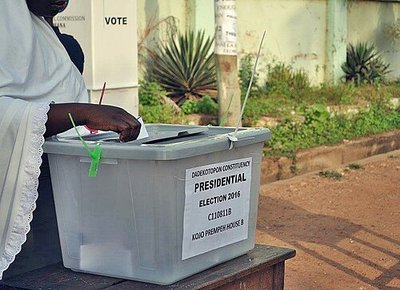
Following the constitutional referendum, the Interim National Electoral Commission (INEC) was established to organize the first multi-party elections in over a decade. The presidential election was held on November 3, 1992. Flt. Lt. Jerry John Rawlings, having shed his military uniform to contest as a civilian candidate under the banner of the newly formed National Democratic Congress (NDC), emerged victorious with 58.7% of the votes. His main challenger, Professor Albert Adu Boahen of the New Patriotic Party (NPP), secured 30.4%.
However, the outcome was immediately disputed by the opposition parties, particularly the NPP, People's National Convention (PNC) led by Dr. Hilla Limann, and the National Independence Party (NIP). They alleged widespread electoral irregularities, including a flawed voters' register, inadequate transparency in ballot counting, and state media bias. In response to these concerns, the opposition parties released a detailed report titled 'The Stolen Verdict,' cataloging their grievances and calling for a re-run of the elections. Their demands were not met, leading to their collective boycott of the parliamentary elections held on December 29, 1992. This boycott resulted in a parliament almost entirely dominated by the NDC and its allied parties, creating a significant legitimacy crisis and setting a tense tone for the nascent Fourth Republic.
Inauguration and Early Challenges (1993-1996)
Despite the political impasse, Jerry John Rawlings was sworn in as the first President of the Fourth Republic on January 7, 1993, at Independence Square in Accra. This date officially marked the commencement of constitutional rule. The new Parliament, with a severely truncated opposition presence, also began its sittings. The initial years of the Fourth Republic were fraught with challenges. The boycott meant that the government lacked a strong parliamentary opposition to hold it accountable, and the political atmosphere remained highly polarized. Civil society organizations, however, stepped into the void, continuing to advocate for greater transparency and accountability.
Efforts were made to bridge the divide. Dialogue between the government and opposition, often mediated by religious leaders and civil society, gradually began. Key institutions like CHRAJ and NCCE started their work, though often operating in a politically charged environment. The media, though initially constrained, slowly began to assert its independence, becoming a crucial platform for public discourse. The period from 1993 to 1996 was essentially a test of the constitutional framework's resilience and the political actors' commitment to democratic principles. It was a time of learning, adapting, and gradually building trust in the new system.
By 1996, with the next general elections on the horizon, the Fourth Republic faced its first major democratic test – whether the opposition would participate and whether the elections would be conducted more credibly. The experiences of 1992 had highlighted the critical importance of a credible electoral process and the need for all stakeholders to accept the rules of the democratic game. The genesis of the Fourth Republic, though born out of contention, laid the foundational stones for Ghana's enduring democratic journey, establishing the constitutional architecture and setting precedents for future political transitions. It demonstrated Ghana's capacity to navigate complex transitions, albeit with significant bumps along the way, towards a more democratic future, offering valuable lessons not only for Ghana but for other African nations embarking on similar paths of political reform.
About This Book
"Ghana's Democratic Journey: 1992 to Present" meticulously chronicles the complex evolution of Ghana's Fourth Republic. It delves into the immediate aftermath of the PNDC era, examining the contentious 1992 elections that returned Jerry John Rawlings to power under the banner of the National Democratic Congress (NDC). The book analyzes the opposition's claims of electoral malfeasance and the gradual building of trust in the electoral process through subsequent elections, including the landmark 2000 election that saw John Agyekum Kufuor of the New Patriotic Party (NPP) assume the presidency, marking the first peaceful transfer of power from one democratically elected government to another. The narrative explores the key institutional reforms undertaken to consolidate democracy, such as strengthening the Electoral Commission, judiciary, and media landscape. It also examines the challenges faced, including corruption, ethnic politics, and economic inequalities that continue to test the resilience of Ghana's democratic institutions. Specific attention is given to the role of civil society organizations in promoting good governance, accountability, and human rights. Further analysis explores the administrations of Presidents John Evans Atta Mills, John Dramani Mahama, and Nana Addo Dankwa Akufo-Addo, highlighting their respective policy agendas, successes, and shortcomings. The book investigates critical issues such as oil revenue management, infrastructure development, and social welfare programs, assessing their impact on Ghana's socio-economic development. It also considers Ghana's role in regional peace-keeping and its contributions to the African Union's agenda for democracy and good governance. Ultimately, the reader gains a comprehensive understanding of the milestones, setbacks, and enduring challenges shaping Ghana's democratic experience since 1992, fostering a nuanced perspective on the complexities of democratic consolidation in Africa.
About the Author
The scholarship on Ghana's Fourth Republic builds upon a rich tradition of political science and historical inquiry into African democratization. Scholars like Richard Jeffries, E. Gyimah-Boadi, and Joseph Ayee have extensively analyzed Ghana's political institutions, electoral processes, and civil society. Their work, often published by the Institute of Economic Affairs (IEA) and the Center for Democratic Development (CDD-Ghana), provides crucial empirical data and theoretical frameworks for understanding Ghana's democratic trajectory. Historians such as Emmanuel Akyeampong and academic journals like the *Journal of Modern African Studies* and *African Affairs* contribute to a broader historical perspective, examining the socio-economic and cultural factors shaping Ghana's political landscape. This book likely draws from this extensive body of literature, synthesizing diverse perspectives to provide a comprehensive account of Ghana's democratic journey.
Key Themes
- Constitutionalism
- Electoral Politics
- Peaceful Transitions of Power
- Corruption and Governance
- Economic Development
- Role of Civil Society
Why This Matters
Understanding Ghana's democratic journey is crucial for grasping contemporary Ghanaian and African heritage. Ghana's experiment in multi-party democracy serves as a bellwether for the continent, demonstrating both the potential and the pitfalls of democratic governance in a post-colonial context. Its relative stability and peaceful transitions of power stand in contrast to other African nations, offering valuable lessons for conflict prevention and nation-building.
For the diaspora, this history offers a powerful connection to the continent, showcasing the agency and resilience of Ghanaians in shaping their own political destiny. Students can learn from Ghana's experiences in navigating the challenges of democratization, including balancing competing interests, promoting inclusive growth, and strengthening democratic institutions. This study is also important to see how Ghana has progressed since colonization. Ghana's experience shows there is no one-way path for democracy and the importance of understanding the nuance of each culture.
Historical and Cultural Context
Ghana's democratic journey is deeply intertwined with the broader history of African decolonization and the struggles for self-determination. The transition to the Fourth Republic can be viewed within the context of the wave of democratization that swept across Africa in the 1990s, following the end of the Cold War. The Sankofa Library's collection on Pan-Africanism and Kwame Nkrumah's legacy provides valuable context, highlighting Ghana's historical commitment to African unity and its role as a pioneer of independence movements. Understanding this broader historical context enriches the reader's understanding of the challenges and opportunities facing Ghana in its quest for democratic consolidation.
Sources & References
- Ayee, J. R. A. (2000). Ghana's Political Transition, 1992-1996: A Study of the Transition to Constitutional Rule. Ghana Universities Press.
- Boahen, A. A. (1996). Muffled Drums: The Third Wave of Democracy in Ghana. Sankofa Educational Publishers.
- Gyimah-Boadi, E. (2004). Democratic Reform in Africa: The Quality of Progress. Lynne Rienner Publishers.
- Nugent, P. (1995). Big Men, Small Boys and Politics in Ghana: Power, Ideology and the Burden of History, 1982-1994. Pinter.
- The Constitution of the Republic of Ghana, 1992.