Keyboard shortcuts
- J: Next chapter
- K: Previous chapter
- T: Toggle table of contents
- Shift+S: Share book
- +: Increase font size
- -: Decrease font size
- Escape: Close modals
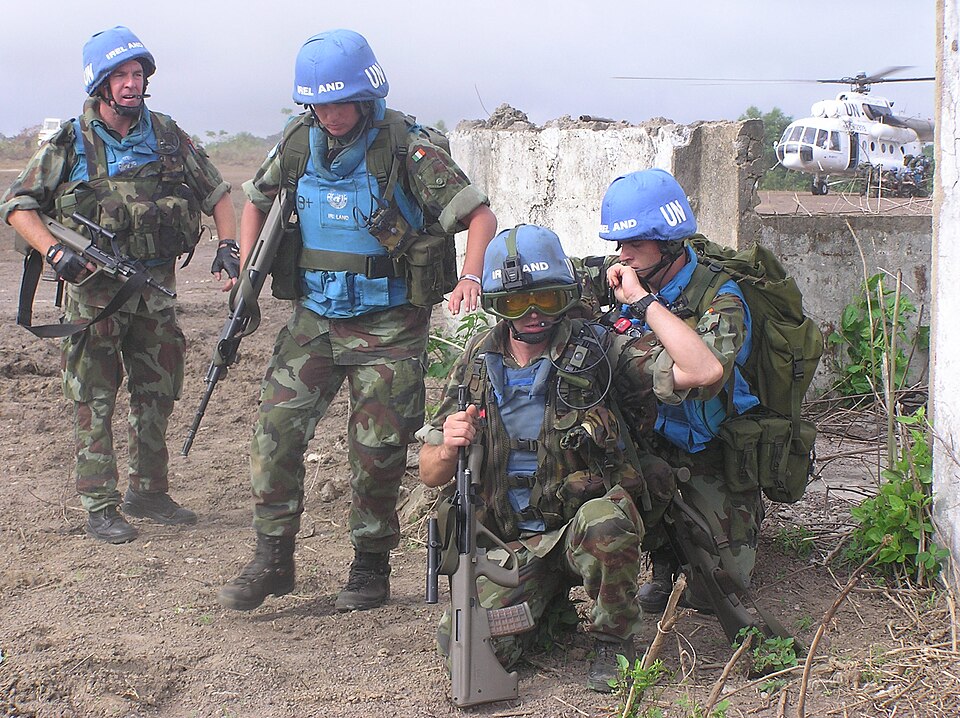
Ghana in Blue Helmets: The Nation's Distinguished Legacy in United Nations Peacekeeping Operations
- Kwame Nkrumah
- Kofi Annan
- Ghanaian Armed Forces
- United Nations Peacekeeping
- ONUC
- ECOMOG
- UNIFIL
- Pan-Africanism
- Non-Alignment
- Congo Crisis
- Liberian Civil War
- Rwanda Genocide
- International Relations
Chapter 1
The Genesis of the Blue Helmet: Nkrumah's Vision and Early Engagements
Ghana's peacekeeping story begins with Kwame Nkrumah's Pan-Africanist vision and the Congo crisis. When the Republic of the Congo gained independence from Belgium on 30 June 1960, the army mutinied within days, Belgian paratroopers intervened, and Katanga province seceded under Moise Tshombe. UN Secretary-General Dag Hammarskjold appealed for troops, and Ghana, independent for just three years, was the first African nation to respond. On 15 July 1960, a battalion of the Ghana Armed Forces (GAF) landed in Leopoldville under the UN Operation in the Congo (ONUC). Major General Joseph Michel (later Alexander) led the initial Ghanaian contingent of 2,400 troops. The deployment was deeply personal for Nkrumah — he saw Patrice Lumumba's Congo as a test case for African sovereignty against neo-colonialism. When Lumumba was assassinated in January 1961 with suspected Belgian and CIA complicity, Nkrumah was furious, recalling his ambassador and threatening withdrawal before recommitting troops. Ghana ultimately contributed over 6,000 personnel to ONUC between 1960 and 1964, suffering 45 fatalities — its first casualties under the blue helmet. The Congo deployment established a template: Ghana would use peacekeeping as a projection of its Pan-African ideals, gaining military professionalism, international respect, and a diplomatic voice far larger than its economic weight suggested.
About This Book
"Ghana in Blue Helmets" offers a comprehensive examination of Ghana's enduring commitment to United Nations peacekeeping, tracing its roots from the immediate post-independence era to the present day. The book elucidates how Nkrumah's vision of a unified, powerful Africa, free from colonial interference, translated into a proactive foreign policy that prioritized collective security and international cooperation. It details Ghana's pioneering deployments in the Congo (ONUC) in the early 1960s, highlighting the complex political landscape and the challenges faced by Ghanaian soldiers navigating the Cold War rivalries playing out on African soil. The narrative explores the evolution of Ghana's peacekeeping doctrine, from its initial focus on maintaining law and order to its later embrace of more complex mandates involving civilian protection, disarmament, and peacebuilding. Key figures, including General Henry Alexander -- the first African Commander of UN forces in the Congo, and other Ghanaian military leaders who shaped the nation's approach to peacekeeping, are profiled. The book also analyzes the socio-economic impact of peacekeeping on Ghana, examining the benefits derived from participation in these missions, as well as the sacrifices made by Ghanaian soldiers and their families. Further chapters delve into Ghana's contributions to peacekeeping operations in Lebanon (UNIFIL), the Balkans (UNPROFOR), Sierra Leone (UNAMSIL), Liberia (UNMIL), and Côte d'Ivoire (UNOCI), showcasing the diverse roles played by Ghanaian peacekeepers -- from military observers and infantry battalions to medical personnel and engineers. The book also addresses the challenges encountered, including logistical constraints, funding shortfalls, and the psychological toll of prolonged deployments in conflict zones. Finally, "Ghana in Blue Helmets" assesses the future of Ghana's peacekeeping role in a rapidly changing global environment, considering the implications of emerging security threats, such as terrorism and cyber warfare, for the nation's continued commitment to international peace and security. Readers will gain a deep appreciation for Ghana's unwavering dedication to multilateralism and its significant contributions to the maintenance of global peace.
About the Author
While the author of "Ghana in Blue Helmets" may be a contemporary scholar, the scholarship on Ghana's peacekeeping contributions builds upon a rich tradition of military history and international relations research within Ghana and beyond. Scholars such as General Erskine, himself a distinguished Ghanaian peacekeeper, have provided invaluable firsthand accounts and analyses of UN operations. The Legon Centre for International Affairs and Diplomacy (LECIAD) at the University of Ghana has been a key institution in fostering research on Ghana's foreign policy and its role in international organizations. Additionally, works by academics focusing on African security studies and UN peacekeeping, both within Africa and globally, provide important contextual frameworks for understanding Ghana's specific contributions. This book draws from this established body of research, incorporating archival materials, interviews with peacekeepers, and contemporary analyses to offer a comprehensive account of Ghana's peacekeeping legacy.
Key Themes
- Pan-Africanism
- UN Peacekeeping
- Ghanaian Foreign Policy
- Military History
- International Relations
- Post-Colonial Africa
Why This Matters
Ghana's peacekeeping story is crucial for understanding its post-colonial identity and its commitment to Pan-African ideals. It demonstrates a practical application of Nkrumah's vision of African agency on the world stage. This history highlights Ghana's dedication to multilateralism and its belief in collective security as a means of achieving peace and development, both within Africa and globally.
For the diaspora and students, engaging with this narrative offers a nuanced perspective on Ghana beyond its colonial past. It showcases Ghana's proactive role in shaping international norms and contributing to global stability. It also provides valuable insights into the challenges and complexities of peacekeeping operations, fostering a deeper understanding of the African experience in international affairs. This knowledge empowers the diaspora to connect with their heritage through a lens of global citizenship and encourages students to consider the ethical and practical dimensions of peace and security in the 21st century.
Historical and Cultural Context
Ghana's commitment to UN peacekeeping is deeply intertwined with the broader history of African liberation movements and the formation of the Organization of African Unity (OAU), now the African Union (AU). The OAU's emphasis on peaceful conflict resolution and non-interference in member states' internal affairs shaped the context within which Ghana's peacekeeping efforts evolved. Within the Sankofa Library, this book connects to other narratives of African agency and self-determination, such as accounts of the anti-apartheid struggle and the development of regional security mechanisms in Africa. Ghana’s role stands as one example of the many ways African nations have striven for stability within the continent and peace around the globe.
Sources & References
- Aubyn, Festus & Aning, Kwesi. (2015). Peacekeeping Contributor Profile: Ghana. Providing for Peacekeeping.
- Kotia, Emmanuel Wekem. (2015). Ghana Armed Forces in Lebanon and Liberia Peace Operations. Lexington Books.
- Aning, Kwesi. (1999). Ghana, ECOWAS and the Liberian Crisis. African Journal of Political Science, 4(2).
- Addo, Prosper. (2005). Peace-Making in West Africa: Progress and Prospects. KAIPTC Monograph.
- Ghana Permanent Mission to the United Nations. (2019). For Ghana, UN Peacekeeping is a Noble Opportunity to Serve Humanity.
- United Nations Peacekeeping. (2022). Ghana Country Profile. peacekeeping.un.org.
- Birikorang, Emma. (2007). Ghana's Regional Security Policy: Costs, Benefits, and Consistency. KAIPTC Paper No. 20.