Keyboard shortcuts
- J: Next chapter
- K: Previous chapter
- T: Toggle table of contents
- Shift+S: Share book
- +: Increase font size
- -: Decrease font size
- Escape: Close modals
The End of an Era: Operation Cold Chop and the Fall of Ghana's First Republic
- Kwame Nkrumah
- First Republic
- National Liberation Council (NLC)
- Military Coup
- Operation Cold Chop
- Ghana Armed Forces
- Accra
- Cold War
- Pan-Africanism
- Convention People's Party (CPP)
- Political Instability
Chapter 1
Ghana on the Brink: Seeds of Discontent in the First Republic
Examines the political, economic, and social landscape of Ghana under Kwame Nkrumah leading up to the coup. This includes analysis of the one-party state, the Preventive Detention Act, economic challenges, perceived corruption, and the growing disaffection within the military and civil service.
About This Book
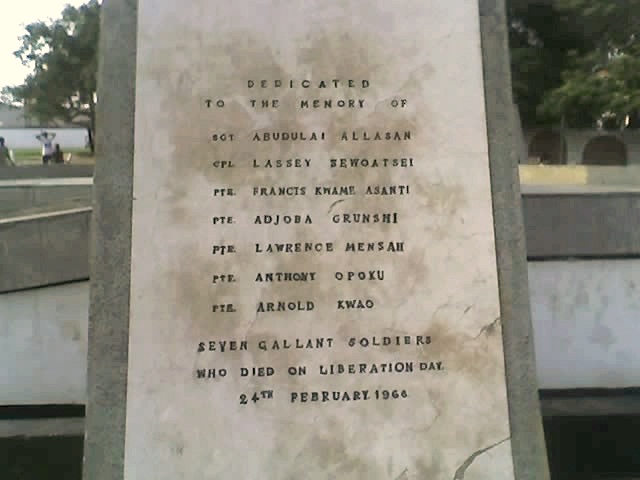
"The End of an Era: Operation Cold Chop and the Fall of Ghana's First Republic" meticulously examines the complex events leading up to and following the 1966 coup that ousted Kwame Nkrumah. The book delves into the socio-political atmosphere of the time, exploring the growing discontent among various segments of Ghanaian society -- including the military, police, intellectuals, and business owners -- with Nkrumah's increasingly centralized and autocratic rule. It details the alleged corruption and economic policies that, despite initial successes in industrialization and infrastructure development, ultimately led to economic hardship and widespread disillusionment. Central to the narrative is an analysis of Nkrumah's Convention People's Party (CPP) and its transformation from a dynamic force for national liberation into a party increasingly reliant on personality cult and suppression of dissent. The book explores the impact of the Preventive Detention Act, which allowed for detention without trial, and the silencing of opposition voices, contributing to a climate of fear and resentment. Furthermore, the text dissects the roles of key figures involved in the coup, including Colonel Emmanuel Kwasi Kotoka and Major Akwasi Amankwaa Afrifa, providing insights into their motivations and the planning behind Operation Cold Chop. It also examines the international context, including the alleged involvement of Western powers, particularly the United States, in destabilizing Nkrumah's regime due to his socialist leanings and pan-Africanist ambitions. The book concludes by assessing the immediate aftermath of the coup, the establishment of the National Liberation Council (NLC), and the subsequent transition towards a multi-party system, analyzing the long-term consequences of this pivotal event on Ghana's political and economic trajectory. Readers will gain a comprehensive understanding of the factors that contributed to the coup, the key players involved, and the lasting impact of this watershed moment on Ghana's post-independence history.
About the Author
Scholarship on the fall of Nkrumah and the First Republic is extensive, with contributions from historians, political scientists, and sociologists both within Ghana and internationally. Key figures like Dennis Austin, whose work offers insightful analyses of Ghanaian politics, and Richard Rathbone, known for his nuanced examinations of Ghanaian economic and social history, have significantly shaped the understanding of this period. Contemporary Ghanaian scholars such as Kwame Arhin and Nana Arhin Brempong have provided invaluable local perspectives, drawing on oral histories and archival research to offer critical interpretations of Nkrumah's legacy and the factors that led to his overthrow. This book draws upon this rich tradition of scholarship, engaging with diverse viewpoints and incorporating both primary and secondary sources to offer a comprehensive and balanced account of this complex historical event.
Key Themes
- Political Instability
- Economic Development and Crisis
- Authoritarianism vs. Democracy
- Military Intervention
- Pan-Africanism
- Cold War Politics
Why This Matters
The 1966 coup remains a watershed moment in Ghanaian history, shaping the country's political landscape for decades to come. Understanding the events leading up to and following Operation Cold Chop is crucial for grasping the complexities of Ghana's post-independence development, its struggles with democratic governance, and its relationship with the international community. This event serves as a cautionary tale about the dangers of unchecked power, economic mismanagement, and the suppression of political dissent.
For the Ghanaian diaspora, understanding this period provides vital context for their own identities and connections to their homeland. Studying the First Republic and its demise allows students and researchers to analyze the successes and failures of early post-colonial nation-building, and to critically examine the legacies of Kwame Nkrumah and the CPP. This analysis facilitates a deeper understanding of contemporary challenges facing Ghana and other African nations, and informs efforts to build more resilient and democratic societies.
Historical and Cultural Context
The 1966 coup must be understood within the broader context of post-colonial Africa, a period marked by political instability, economic challenges, and the lingering influence of Cold War politics. Many newly independent African nations experienced military coups and authoritarian regimes, often fueled by internal divisions, economic pressures, and external interference. Within the Sankofa Library, this book connects to collections documenting other similar events across the continent, as well as materials related to the Pan-African movement and the challenges of nation-building in the post-colonial era.
Sources & References
- Afrifa, A. A. (1967). The Ghana Coup, 24th February 1966. Frank Cass & Co. Ltd.
- Ocran, A. K. (1968). A Myth is Broken: An Account of the Ghana Coup d'Etat of 24th February 1966. Longmans.
- Nkrumah, K. (1969). Dark Days in Ghana. Panaf Books.
- Austin, D. (1970). Politics in Ghana, 1946-1960. Oxford University Press. (Provides crucial context for Nkrumah's rise and early rule).
- Birmingham, W., Neustadt, I., & Omaboe, E. N. (Eds.). (1967). A Study of Contemporary Ghana: Some Aspects of Social Structure. Allen & Unwin. (Offers economic and social context of the period).