Keyboard shortcuts
- J: Next chapter
- K: Previous chapter
- T: Toggle table of contents
- Shift+S: Share book
- +: Increase font size
- -: Decrease font size
- Escape: Close modals
The Unraveling of Utopia: 'Operation Cold Chop' and the Twilight of Nkrumah's First Republic
- Kwame Nkrumah
- Operation Cold Chop
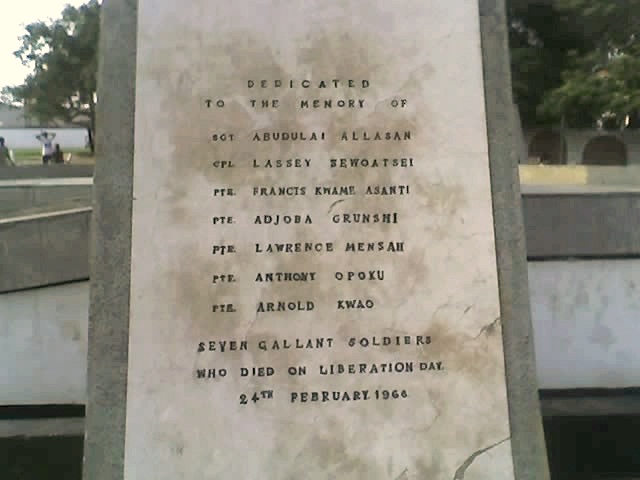
- 1966 Military Coup
- National Liberation Council (NLC)
- F.A. Kotoka
- E.K. Afrifa
- Ghana Armed Forces
- Convention People's Party (CPP)
- Pan-Africanism
- Cold War
- First Republic
- Political Instability
Chapter 1
The Seeds of Discontent: Ghana Under Nkrumah's First Republic (1960-1966)
By the early 1960s, Kwame Nkrumah's Ghana had drifted far from the jubilant optimism of independence night in 1957. The Convention People's Party (CPP), which had governed since 1951, embarked on ambitious industrialization projects including the Akosombo Dam on the Volta River and the Tema Motorway, but these generated crushing foreign debt. In 1960, the CPP moved to nationalize the economy, tightening control over currency, taxation, and trade. By 1963, ordinary Ghanaians suffered chronic shortages of basic goods and rampant price gouging. The Preventive Detention Act, passed in 1958, allowed the government to jail opponents without trial for up to five years, and by 1961 over 400 political prisoners languished in cells. In 1964, Nkrumah staged a heavily rigged constitutional referendum that made the CPP the sole legal party and himself president for life. Press freedom collapsed entirely. The Ghanaian Times declared in October 1965 that socialist Ghana could not tolerate any newspaper departing from Nkrumaist ideology. General Akwasi Afrifa later described Radio Ghana as broadcasting a sickening stream of Stalinist adulation from early morning till late at night. The CPP controlled the Ghana Trades Union Congress, the Ghana Muslim Council, and virtually every civil organization. Nkrumah's personality cult, modeled partly on Soviet and Chinese examples, alienated intellectuals and traditional authorities alike. The Ghanaian cedi lost value rapidly, and military salaries, frozen since 1957, bought less each year. The stage was set for a dramatic reckoning.
About This Book
"The Unraveling of Utopia: 'Operation Cold Chop' and the Twilight of Nkrumah's First Republic" meticulously dissects the complex factors culminating in the 1966 coup that ousted Kwame Nkrumah, Ghana's first president. It probes beyond simplistic narratives of economic mismanagement and authoritarianism, delving into the intricacies of Cold War politics, internal power struggles within the CPP, and the grievances of various social groups -- particularly the military and the burgeoning middle class -- who felt marginalized by Nkrumah's socialist policies. The book examines the role of international actors, carefully weighing evidence of external influence, while avoiding sensationalism, to provide a balanced perspective on the extent of their involvement. The narrative traces Nkrumah's evolution from a charismatic pan-Africanist leader to a figure increasingly perceived as autocratic. It analyzes the establishment of the Preventive Detention Act, the one-party state, and the cult of personality that surrounded Nkrumah, examining how these measures, intended to consolidate power and accelerate development, ultimately alienated segments of the population. The book dedicates significant attention to the key figures involved in the coup, providing detailed biographical sketches of Kotoka, Afrifa, and Harlley, exploring their motivations and the strategies they employed to seize control. It scrutinizes the immediate aftermath of the coup, including the establishment of the National Liberation Council (NLC), the dismantling of Nkrumah's socialist programs, and the impact on Ghana's relationship with the Eastern and Western blocs. The author uses primary sources, including archival documents, personal testimonies, and newspaper articles from the period, to paint a comprehensive picture of this tumultuous era, highlighting the divergent perspectives and experiences of Ghanaians during this time. Ultimately, the book challenges readers to critically examine the legacy of Nkrumah and the enduring consequences of "Operation Cold Chop" on Ghana's political and economic trajectory.
About the Author
Scholarship on the Nkrumah era and the 1966 coup is extensive, building upon initial analyses by historians like Dennis Austin and emerging from revisionist studies in the 1980s and 90s. The work of Richard Rathbone provides essential insight into Ghanaian politics during this period. More recently, historians such as Jean Allman and Lynne Duke have explored the social and cultural dimensions of Nkrumah's regime and its aftermath. The Institute of African Studies at the University of Ghana has been central to preserving primary source materials and fostering research on this critical period. This book adds to a growing body of literature that seeks to understand the complexities of Nkrumah's legacy and the long-term consequences of the coup for Ghanaian democracy and development.
Key Themes
- Pan-Africanism
- Authoritarianism vs. Development
- Cold War Influence
- Military Coups
- Political Instability
- Economic Policy
- Nationalism
Why This Matters
Understanding the 1966 coup is crucial for comprehending Ghana's subsequent political and economic development. It represents a turning point, marking the end of the First Republic and ushering in a period of military rule and political instability. Examining the factors that led to the coup provides valuable lessons about the challenges of nation-building, the complexities of post-colonial leadership, and the dangers of unchecked power. For the diaspora, this story is particularly relevant as it sheds light on the forces that shaped Ghana's trajectory and the ongoing struggle for democracy and self-determination in Africa. Students can learn from this case study about the importance of critical thinking, the need for accountability in governance, and the enduring legacy of colonialism and neo-colonialism in shaping African societies.
Historical and Cultural Context
The 1966 coup must be understood within the broader context of Cold War politics and the wave of military interventions that swept across Africa in the 1960s and 70s. Nkrumah's pan-Africanist vision, while inspiring, also drew the ire of Western powers wary of his socialist leanings and close ties to the Eastern bloc. This event also connects to larger themes within the Sankofa Library, such as the challenges of decolonization, the rise and fall of charismatic leaders, and the ongoing struggle for economic and political independence in Africa.
Sources & References
- Afrifa, A. A. (1966). The Ghana Coup: 24th February 1966. Frank Cass.
- Nkrumah, K. (1969). Dark Days in Ghana. Panaf Books.
- Pinkney, R. (1972). Ghana Under Military Rule, 1966-1969. Methuen.
- Austin, D. (1970). Politics in Ghana, 1946-1960. Oxford University Press.
- Hansen, E. (1987). Ghana under Nkrumah and the Coup of 1966. In E. Hansen & K. Ninsin (Eds.), Ghana: The Political Economy of Transition (pp. 21-46). Zed Books.