Keyboard shortcuts
- J: Next chapter
- K: Previous chapter
- T: Toggle table of contents
- Shift+S: Share book
- +: Increase font size
- -: Decrease font size
- Escape: Close modals
Guardians of the Earth: The Dagaaba and Pre-Colonial Traditions of Upper West Ghana
- Dagaaba
- Upper West Ghana
- Tendaana
- Baga Festival
- Dagara language
- Land Tenure
- Oral Tradition
- Indigenous Religion
- Patrilineal Clans
- Pre-Colonial Ghana
Chapter 1
Part 1
## I. Echoes of Migration: The Dagaaba's Ancestral Journeys and Early Settlements
The history of the Dagaaba people in what is now Upper West Ghana is a compelling narrative of movement, adaptation, and the establishment of enduring cultural institutions. While precise dates remain elusive due to the reliance on oral tradition, scholarly consensus, supported by ethnographic and linguistic evidence, suggests that the Dagaaba began migrating into their present territories from areas further north, possibly from the Sahelian regions, between the 14th and 17th centuries. These migrations were often gradual, driven by factors such as environmental changes, inter-ethnic conflicts, and the search for fertile lands. The Dagaaba are believed to have moved in waves, settling in small, autonomous communities rather than as a unified, large-scale invasion force.
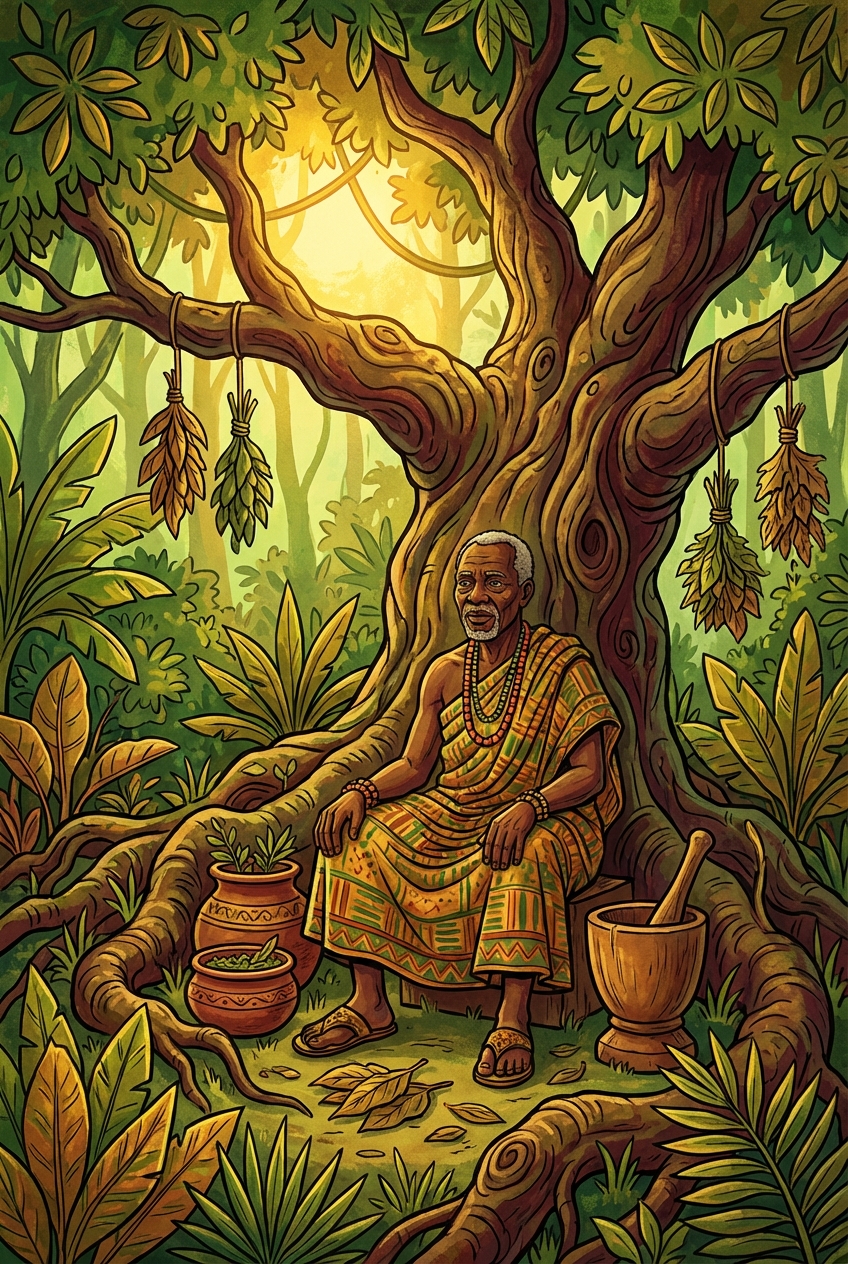
Early Dagaaba settlements were characterized by a decentralized political structure, where authority was not vested in a single paramount chief but rather distributed among clan elders and, crucially, the Tendaana (earth priest). This contrasts sharply with the more centralized kingdoms found in other parts of Ghana, such as Asante or Dagomba. The Dagaaba's arrival often involved negotiations and sometimes conflicts with pre-existing, smaller groups, leading to complex patterns of coexistence and assimilation. Oral histories recount initial interactions with groups like the Sisala and Wala, with whom the Dagaaba developed intricate relationships of trade, occasional conflict, and cultural exchange. The establishment of these early communities laid the foundation for the unique Dagaaba social and spiritual order, deeply rooted in their connection to the land they now called home. This period of settlement was critical in shaping their distinct identity, language, and the fundamental principles of their land tenure system, which would remain central to their way of life for centuries.
About This Book
"Guardians of the Earth: The Dagaaba and Pre-Colonial Traditions of Upper West Ghana" offers a deep dive into the world of the Dagaaba people before the imposition of European colonial rule. It paints a vivid picture of a society intimately connected to its land and governed by intricate customary laws and spiritual beliefs. The book traces the likely origins of the Dagaaba, piecing together oral traditions and archaeological evidence to suggest a migration from the east, potentially related to groups in present-day Burkina Faso. It meticulously details the fragmented political landscape, characterized by decentralized village governance rather than large, centralized states. Crucially, the book emphasizes the pivotal role of the Tendaana -- the earth priest -- in maintaining social order and spiritual harmony. The Tendaana held immense authority as the custodian of the land, mediating disputes, performing crucial agricultural rituals, and ensuring the well-being of the community. The text explores key aspects of Dagaaba social organization, including kinship systems, marriage customs, and inheritance practices. It analyzes the significance of agriculture, particularly the cultivation of millet and sorghum, and the methods employed by the Dagaaba to adapt to the semi-arid environment. The book highlights the importance of blacksmithing, weaving, and pottery in the Dagaaba economy, showcasing the craftsmanship and resourcefulness of the people. Furthermore, it examines the spiritual beliefs and practices of the Dagaaba, including ancestor veneration, the worship of local deities, and the performance of elaborate rituals to ensure rainfall, good harvests, and protection from misfortune. The book also addresses the pre-colonial interactions between the Dagaaba and neighboring groups, such as the Wala and Gonja, highlighting both periods of conflict and peaceful exchange. Readers will gain a comprehensive understanding of the Dagaaba worldview, their social structures, their economic activities, and their spiritual beliefs, all of which contributed to a unique and resilient cultural identity. The book concludes by briefly outlining the initial encounters between the Dagaaba and European colonial forces, setting the stage for the subsequent transformation of their society.
About the Author
While a single author is attributed to this book for the Sankofa Digital Heritage Library, the information contained within draws upon decades of scholarship from various historians, anthropologists, and linguists. Scholars like Jack Goody, known for his work on the LoDagaa (a related group), provided valuable insights into the social organization and kinship systems prevalent in the Upper West Region. The research of local Ghanaian historians, often working within universities like the University of Ghana and the University of Cape Coast, have been instrumental in collecting and preserving oral traditions and archaeological findings related to the Dagaaba. Moreover, the linguistic work carried out by scholars studying the Dagaare language has contributed significantly to understanding the historical relationships between the Dagaaba and other groups in the region. This book is a synthesis of their collective efforts, acknowledging the debt owed to those who have dedicated their lives to understanding and documenting the history and culture of the Dagaaba people.
Key Themes
- Tendaana Institution
- Decentralized Governance
- Agricultural Practices
- Ancestor Veneration
- Inter-Group Relations
- Dagaare Language
- Environmental Adaptation
Why This Matters
Understanding the pre-colonial history of the Dagaaba is crucial for appreciating the diversity and resilience of Ghanaian and African cultures. It challenges the often-dominant narratives that focus solely on centralized states and highlights the significance of decentralized societies in shaping the continent's history. By studying the Dagaaba, we gain insights into alternative models of governance, resource management, and social organization. This knowledge is particularly relevant today as communities grapple with issues of land rights, environmental sustainability, and social cohesion.
For the diaspora, engaging with the history of the Dagaaba provides a connection to their ancestral roots and a deeper understanding of the values and traditions that have shaped their identity. Students can learn valuable lessons about the importance of oral history, the complexities of cultural preservation, and the need to challenge Eurocentric perspectives on African history. The story of the Dagaaba offers a compelling example of a people who successfully adapted to their environment, maintained their cultural integrity, and resisted external pressures, providing inspiration and hope for the future.
Historical and Cultural Context
The Dagaaba history connects to broader themes in African history, particularly the prevalence of decentralized political systems common across West Africa, particularly in areas north of the large state formations. The Tendaana institution, as a form of earth-based governance and spiritual leadership, echoes similar roles found in other West African societies, such as the *bo komfo* of the Akan. Including this text in the Sankofa Digital Heritage Library alongside histories of centralized kingdoms like Asante and Dagbon provides a balanced and nuanced understanding of the diverse political and social landscapes that characterized pre-colonial Ghana. Understanding this pre-colonial order is critical to grasping the impact of colonial administration on this unique social and political structure.
Sources & References
- Goody, Jack. *The Social Organisation of the LoWiili*. Oxford University Press, 1956.
- Goody, Jack. *Death, Property and the Ancestors: A Study of the Mortuary Customs of the LoDagaa of Northern Ghana*. Stanford University Press, 1962.
- Der, Benedict G. *The Slave Trade in Northern Ghana*. Woeli Publishing Services, 1998.
- Tuurey, Gabriel. *Dagaaba Traditional Religion*. Wa, Ghana: Wa Catholic Press, 1978.
- Lentz, Carola. *Contested Boundaries: Itinerancy and the Making of the Upper West Region of Ghana*. Indiana University Press, 2018.