Keyboard shortcuts
- J: Next chapter
- K: Previous chapter
- T: Toggle table of contents
- Shift+S: Share book
- +: Increase font size
- -: Decrease font size
- Escape: Close modals
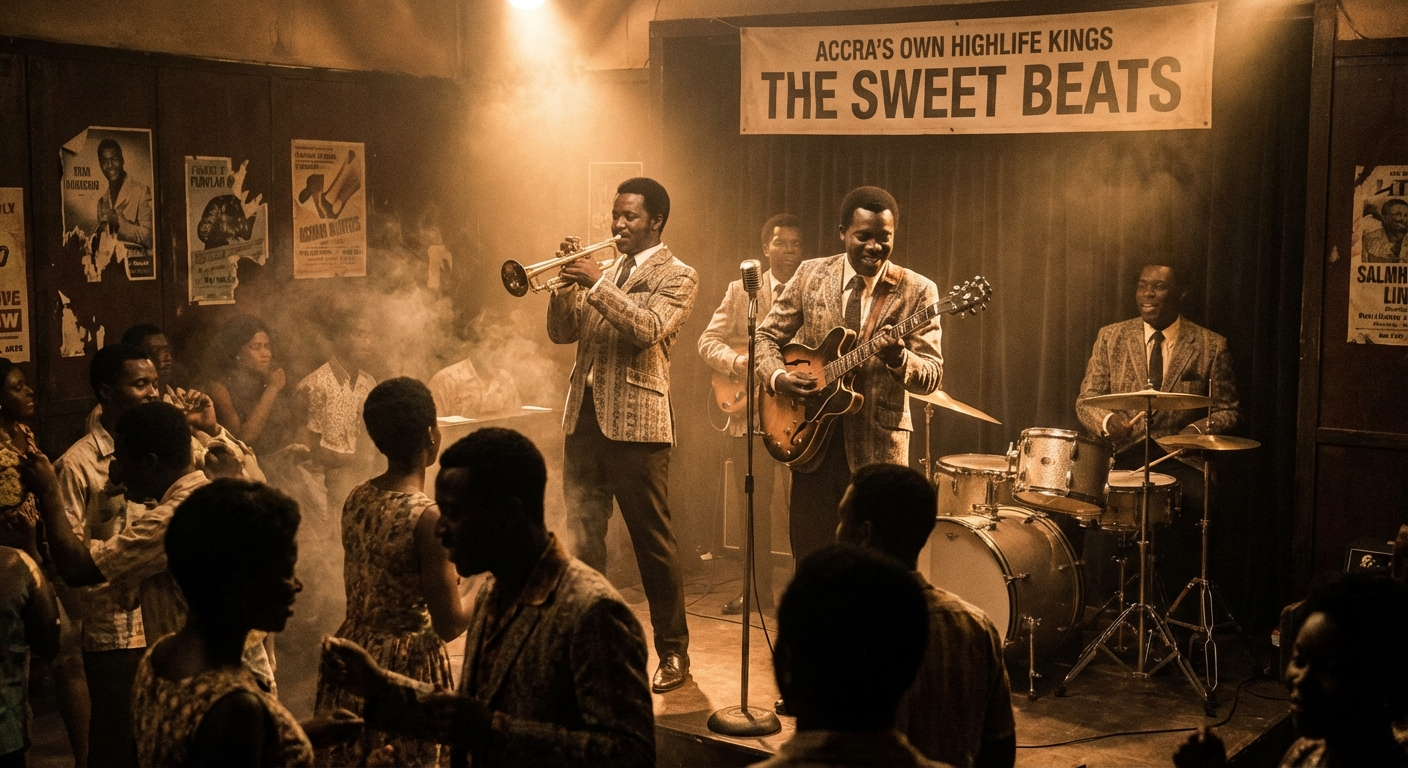
The Charismatic Enigma: Jerry John Rawlings, Revolutionary Praxis, and Ghana's Democratic Odyssey (1979-2001)
- Jerry John Rawlings
- June 4th Uprising
- 31st December Revolution
- Provisional National Defence Council (PNDC)
- National Democratic Congress (NDC)
- Structural Adjustment Programs (SAPs)
- Ghanaian Fourth Republic
- Democratization
- Economic Liberalization
- Populism
Chapter 1
The Genesis of a Revolutionary: Rawlings's Early Life and the June 4th Uprising (1979)
Jerry John Rawlings was born on 22 June 1947 in Accra to Victoria Agbotui, an Anlo Ewe from Dzelukope near Keta, and James Ramsey John, a Scottish chemist from Castle Douglas, Kirkcudbrightshire, who returned to Britain in 1959 and never lived with the family. Raised by his mother in modest circumstances, Rawlings attended Achimota School — the same institution that had educated Nkrumah, Danquah, and a generation of Gold Coast nationalists.
He joined the Ghana Air Force in 1967, training at Takoradi, and graduated in January 1969 as a pilot officer, winning the "Speed Bird Trophy" for best cadet in flying. He earned the rank of flight lieutenant by April 1978. But Ghana in the 1970s was a nation in freefall. General Ignatius Kutu Acheampong, who had seized power in January 1972, presided over spectacular corruption while the economy collapsed — inflation exceeded 100%, essential goods vanished from shelves, and the "kalabule" (black market) economy thrived.
On 15 May 1979, Flight Lieutenant Rawlings led an attempted coup against the Supreme Military Council (SMC II) under General Fred Akuffo, who had replaced Acheampong in a palace coup the previous year. The attempt failed. Rawlings was arrested and court-martialled, but his defiant speech from the dock — broadcast by journalists who ignored censorship orders — electrified the nation. He declared that the senior officers had betrayed Ghana and that junior ranks and ordinary people deserved better.
On 4 June 1979, sympathetic soldiers of the rank-and-file stormed the guardroom, freed Rawlings, and overthrew Akuffo. The Armed Forces Revolutionary Council (AFRC), a 15-member body chaired by Rawlings with Captain Kojo Boakye-Djan as spokesman, took power. What followed was a brutal 112-day "house-cleaning exercise": former heads of state Acheampong, Akuffo, and A.A. Afrifa were executed by firing squad. Market women accused of hoarding were publicly humiliated. Makola Market No. 1 in Accra was demolished on 20 August 1979 as a symbol of kalabule profiteering. The AFRC's message was visceral: corruption would be punished with blood.
True to his word, Rawlings handed power to the democratically elected government of President Hilla Limann of the People's National Party (PNP) on 24 September 1979 — making him, at that point, the rare African coup leader who voluntarily surrendered power.
About This Book
"The Charismatic Enigma" delves into the complex legacy of Jerry John Rawlings, examining his profound impact on Ghana’s political, economic, and social fabric between 1979 and 2001. The book meticulously analyzes the socio-economic conditions that fueled the 1979 June 4th Uprising, exploring the widespread discontent with corruption, economic mismanagement, and perceived inequalities that permeated Ghanaian society. It details the initial transfer of power to the People's National Party (PNP) under Hilla Limann and the subsequent disillusionment that paved the way for the 31st December Revolution in 1981. The study provides a nuanced account of the Provisional National Defence Council (PNDC) era, dissecting its initial revolutionary fervor, populist policies, and attempts to restructure the Ghanaian economy. It critically examines the Economic Recovery Programme (ERP) and the Structural Adjustment Programmes (SAP) implemented under the guidance of the World Bank and the International Monetary Fund, assessing their successes and failures, and the social costs incurred. The book also investigates the PNDC's human rights record, addressing allegations of extrajudicial killings and suppression of dissent, while acknowledging the regime's efforts to instill discipline and accountability in public life. Furthermore, it elucidates Rawlings' transition from military ruler to democratically elected president in 1992, scrutinizing the factors that influenced his decision to embrace multi-party democracy. The book meticulously analyzes the 1992 and 1996 elections, the political dynamics between the ruling National Democratic Congress (NDC) and opposition parties, and the challenges faced by Ghana's nascent democracy. Finally, the work reflects on Rawlings' enduring legacy, exploring his contributions to Ghana’s political stability, economic development, and regional influence, while acknowledging the controversies that continue to surround his name. Readers will gain insight into the motivations, complexities, and long-term consequences of Rawlings' leadership and the profound changes he wrought upon Ghanaian society.
About the Author
The historical narrative surrounding Jerry John Rawlings and the PNDC era has been shaped by numerous Ghanaian and international scholars across various disciplines. Works by historians like Richard Jeffries, Donald Rothchild, and E. Gyimah-Boadi provide valuable insights into the political economy of the period and the dynamics of Ghana's democratic transition. Legal scholars such as H. Kwasi Prempeh have examined the constitutional reforms and the evolution of Ghana's legal framework under Rawlings. The work of political scientists like Joseph Ayee and Kwame Boafo-Arthur offer critical analyses of the political institutions and electoral processes during the era. This book builds upon this rich tradition of scholarship, synthesizing diverse perspectives to offer a comprehensive and nuanced understanding of Rawlings' impact on Ghana.
Key Themes
- Revolutionary Leadership
- Economic Structural Adjustment
- Democratic Transition
- Political Corruption
- Social Justice
- Human Rights
- Ghanaian Nationalism
Why This Matters
Understanding the Rawlings era is crucial for comprehending modern Ghana and its trajectory. The period witnessed profound transformations that continue to shape the nation's political culture, economic policies, and social dynamics. The legacy of the PNDC and Rawlings' leadership is still debated and contested, making it essential to critically engage with this history.
For the African diaspora, this story offers insights into the challenges and possibilities of post-colonial development, the complexities of political leadership, and the struggles for social justice on the continent. Students, in particular, should study this era to understand the processes of democratization, the impact of globalization, and the enduring legacies of revolutionary movements in Africa. Examining Rawlings' rise and rule provides a case study of the interplay between charismatic leadership, socio-economic transformation, and the quest for national development.
Historical and Cultural Context
The Rawlings era must be understood within the broader context of post-colonial Africa. His rise to power reflected a recurring theme on the continent: military interventions in response to perceived failures of civilian governments. The economic policies implemented during the PNDC period were influenced by global trends, including the rise of neoliberalism and the conditionalities imposed by international financial institutions. Furthermore, the transition to multi-party democracy in Ghana resonated with similar transitions occurring across Africa in the 1990s, marking a significant shift in the continent's political landscape. This book enriches the Sankofa Library by providing a detailed case study of one nation's journey through these transformative decades.
Sources & References
- Nugent, Paul. 'Big Men, Small Boys and Politics in Ghana: Power, Ideology and the June 4th Movement'. Pinter, 1995.
- Shillington, Kevin. 'Ghana and the Rawlings Factor'. Palgrave Macmillan, 1992.
- Gyimah-Boadi, E. 'Ghana's Political Transition'. In 'State, Conflict, and Democracy in Africa', edited by Richard Joseph, Lynne Rienner Publishers, 1996.
- Herbst, Jeffrey. 'The Politics of Reform in Ghana, 1982-1991'. University of California Press, 1993.
- Boafo-Arthur, Kwame. 'Ghana: One Decade of the Liberal State'. Zed Books, 2007.