Keyboard shortcuts
- J: Next chapter
- K: Previous chapter
- T: Toggle table of contents
- Shift+S: Share book
- +: Increase font size
- -: Decrease font size
- Escape: Close modals
The Crucible of Self-Rule: Nkrumah's Positive Action and Ghana's Accelerated Path to Independence
- Kwame Nkrumah
- Convention People's Party (CPP)
- Self-Government Now
- General Strike 1950
- Civil Disobedience
- Decolonization
- Gold Coast
- British Colonialism
- Accra
- Sekondi-Takoradi
- Komla Gbedemah
Chapter 1
The Gold Coast at a Crossroads: Seeds of Discontent (1945-1949)
The Gold Coast that greeted returning servicemen after World War II was a powder keg of frustration. Over 65,000 Gold Coast soldiers had served in the British forces across Burma, East Africa, and the Middle East, yet upon demobilisation they found their promised gratuities delayed, land settlement schemes unfulfilled, and employment scarce. The colonial economy remained extractive — cocoa farmers received a fraction of world market prices while the Association of West African Merchants (AWAM), dominated by firms like the United Africa Company (a Unilever subsidiary), Cadbury Brothers, and the Compagnie Française de l'Afrique Occidentale, controlled retail trade and fixed prices at will. Governor Sir Gerald Creasy, nicknamed "Crazy Creasy" by the Gold Coast press, seemed oblivious to the gathering storm.
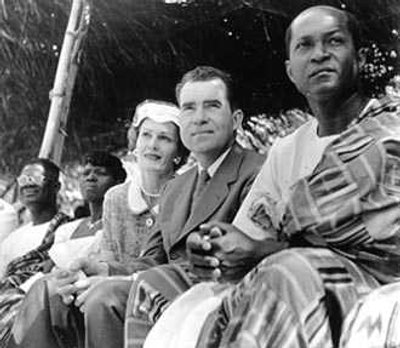
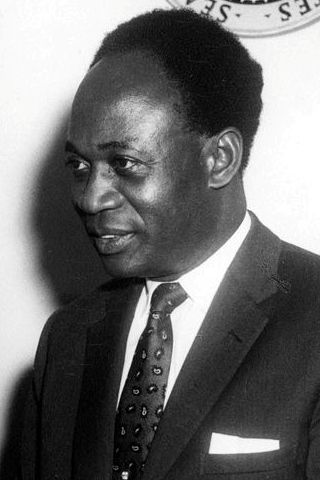
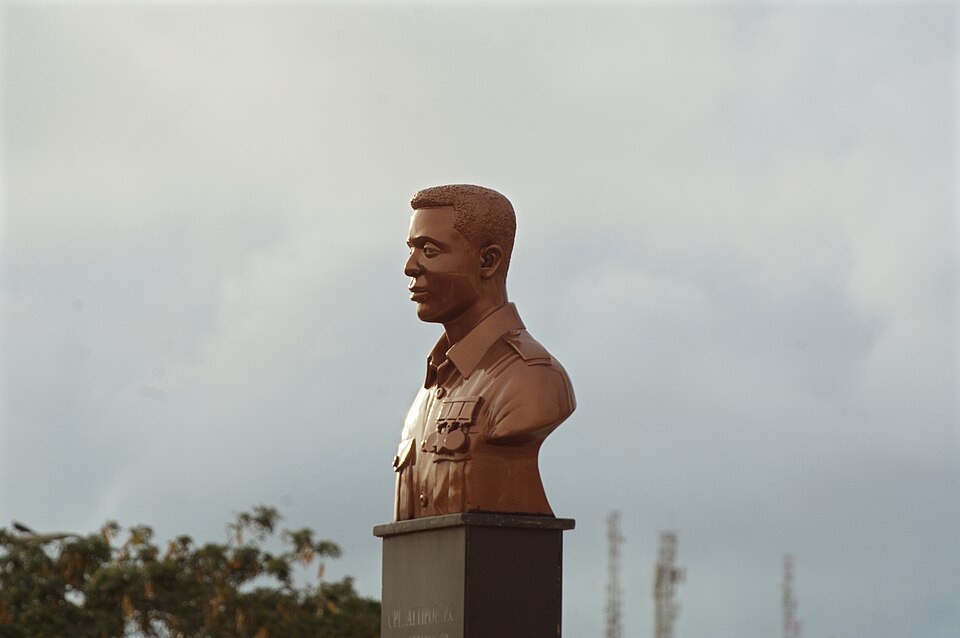
The catalyst came on 28 February 1948, when a peaceful march of ex-servicemen towards Christiansborg Castle was met with gunfire at a road junction near Osu. Superintendent Colin Imray personally shot dead Sergeant Adjetey, Corporal Attipoe, and Private Lamptey. The shootings ignited five days of rioting across Accra — 29 killed, 237 injured, European-owned shops looted and burned. The colonial government arrested six nationalist leaders on 12 March 1948 — J.B. Danquah, Kwame Nkrumah, Ebenezer Ako Adjei, Edward Akufo-Addo, Emmanuel Obetsebi-Lamptey, and William Ofori Atta — detaining them without trial in the Northern Territories. The Watson Commission, dispatched from London under Aiken Watson KC, concluded that the Burns Constitution of 1946 was "outmoded at birth" and recommended sweeping reforms. The Coussey Committee of forty distinguished Gold Coasters, including Danquah and Akufo-Addo, drafted a new constitution providing for elected African ministers — but stopping short of full self-government. Nkrumah, who had returned from twelve years abroad (Lincoln University BA 1939, STB 1942; University of Pennsylvania MSc and MA; London School of Economics; and the transformative Fifth Pan-African Congress in Manchester, October 1945, alongside George Padmore, W.E.B. Du Bois, and Jomo Kenyatta), found the Coussey recommendations inadequate. The stage was set for confrontation.
About This Book
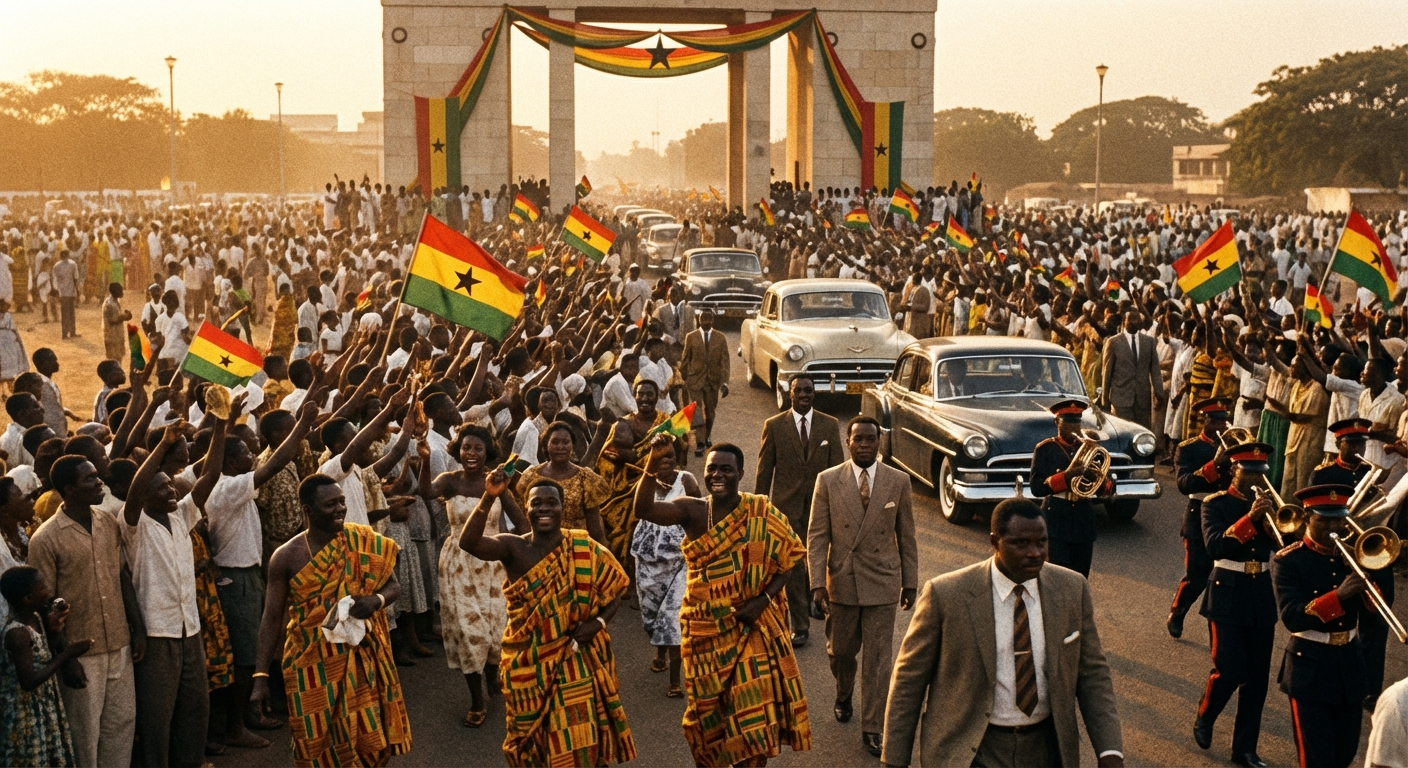
"The Crucible of Self-Rule: Nkrumah's Positive Action and Ghana's Accelerated Path to Independence" meticulously examines the socio-political climate in the Gold Coast that led to the launch of the Positive Action campaign in 1950. The book argues that Positive Action was not merely a spontaneous outburst of popular discontent, but a carefully planned and strategically executed campaign designed to force the British colonial administration to concede to demands for immediate self-government. It details Nkrumah's organizational strategies within the CPP, highlighting the mobilization of various segments of society – urban workers, rural farmers, youth, and women – through effective propaganda and grassroots organizing. The book delves into the specific grievances that fueled the campaign, including the perceived inadequacies of the Coussey Committee Report, the economic hardships faced by cocoa farmers, and the widespread disillusionment with the existing political structures. It provides a chronological account of the key events of Positive Action, starting with the declaration of the campaign on January 8, 1950, and the subsequent wave of strikes, demonstrations, and civil disobedience that paralyzed the Gold Coast. The colonial government's response, including the arrest and imprisonment of Nkrumah and other CPP leaders, is also examined in detail. Furthermore, the book analyzes the impact of Positive Action on the political landscape of the Gold Coast. It argues that, despite the initial crackdown, the campaign ultimately proved to be a resounding success. The British government, faced with mounting pressure both domestically and internationally, was forced to reconsider its stance on self-government. The 1951 elections, which saw Nkrumah's CPP win a landslide victory even with Nkrumah still in prison, served as a clear mandate for independence. The book also discusses the legacy of Positive Action, emphasizing its significance as a model for non-violent resistance movements across Africa and the developing world. Readers will gain a comprehensive understanding of Nkrumah's leadership, the CPP's organizational strength, and the crucial role of Positive Action in accelerating Ghana's path to independence.
About the Author
The scholarship surrounding Nkrumah and the independence era is rich and diverse, built upon the work of pioneering historians like Dennis Austin, whose early studies provided foundational analyses of Ghanaian politics. More recent contributions, such as those by Richard Rathbone and David Birmingham, have delved deeper into the social and economic contexts of the period. Important, too, are the works of Ghanaian scholars like A. Adu Boahen, who offered critical indigenous perspectives on Nkrumah's legacy and the complexities of post-colonial development. The Institute of African Studies at the University of Ghana has served as a crucial center for research, preserving oral histories and documenting the memories of those who lived through this transformative period. This book draws upon these established traditions, incorporating both archival research and contemporary scholarship to provide a nuanced account of Positive Action.
Key Themes
- Positive Action
- Civil Disobedience
- Colonial Resistance
- Kwame Nkrumah
- Convention People's Party
- Self-Governance
- Ghanaian Independence
Why This Matters
The story of Positive Action is vital for understanding Ghana's journey to nationhood and its subsequent role in shaping the African continent. It highlights the power of organized resistance against seemingly insurmountable odds and demonstrates the strategic brilliance of Nkrumah's leadership. It resonates deeply with the African diaspora, offering a powerful example of how Africans mobilized to reclaim their agency and determine their own destinies.
For students of history and political science, Positive Action provides a valuable case study in non-violent resistance, political mobilization, and the dynamics of decolonization. It demonstrates that independence was not simply granted, but rather won through sustained struggle and sacrifice. Understanding this history is crucial for appreciating the challenges and triumphs of post-colonial Africa and for inspiring future generations to continue the fight for social justice and self-determination.
Historical and Cultural Context
Positive Action should be understood within the broader context of Pan-Africanism and the global movement for decolonization following World War II. Nkrumah's vision of a united and independent Africa drew inspiration from earlier Pan-African thinkers like Marcus Garvey and W.E.B. Du Bois. Within the Sankofa Digital Heritage Library, this narrative connects to other movements for self-determination across the continent, such as the Mau Mau uprising in Kenya and the Algerian War of Independence, illustrating a shared struggle against colonial rule and a common aspiration for liberation. This book is also relevant to studies of non-violent resistance, connecting to the philosophies of Mahatma Gandhi and Martin Luther King Jr., highlighting the universality of these tactics in the fight for social change.
Sources & References
- Nkrumah, Kwame. Ghana: The Autobiography of Kwame Nkrumah. Panaf Books, 1957.
- Rooney, David. Kwame Nkrumah: The Political Kingdom in the Gold Coast. St. Martin's Press, 1988.
- Birmingham, David. The Decolonization of Africa. Ohio University Press, 1995.
- Fuller, Harcourt. Building the Ghanaian Nation-State: Kwame Nkrumah's Political Thought and the Nation-Building Project, 1957-1966. Palgrave Macmillan, 2014.
- Austin, Dennis. Politics in Ghana, 1946-1960. Oxford University Press, 1964.