Keyboard shortcuts
- J: Next chapter
- K: Previous chapter
- T: Toggle table of contents
- Shift+S: Share book
- +: Increase font size
- -: Decrease font size
- Escape: Close modals

Echoes of the Sahel: The Gonja Kingdom, Islamic Expansion, and the Forging of Northern Ghana
- Gonja
- Islam
- Mande
- Wangara
- Salaga
- Savannah Region
- Pre-colonial Ghana
- State formation
- Trans-Saharan trade
- Ngbanya
- Volta Basin
Chapter 1
The Genesis of the Gonja State: Ngbanya Hegemony and Multi-Ethnic Foundations
Explores the origins of the Gonja Kingdom, tracing the arrival of the Ngbanya warrior elite, their Mande connections, and the processes through which they established dominance over diverse indigenous populations, laying the groundwork for a unique multi-ethnic polity in the Volta Basin.
About This Book
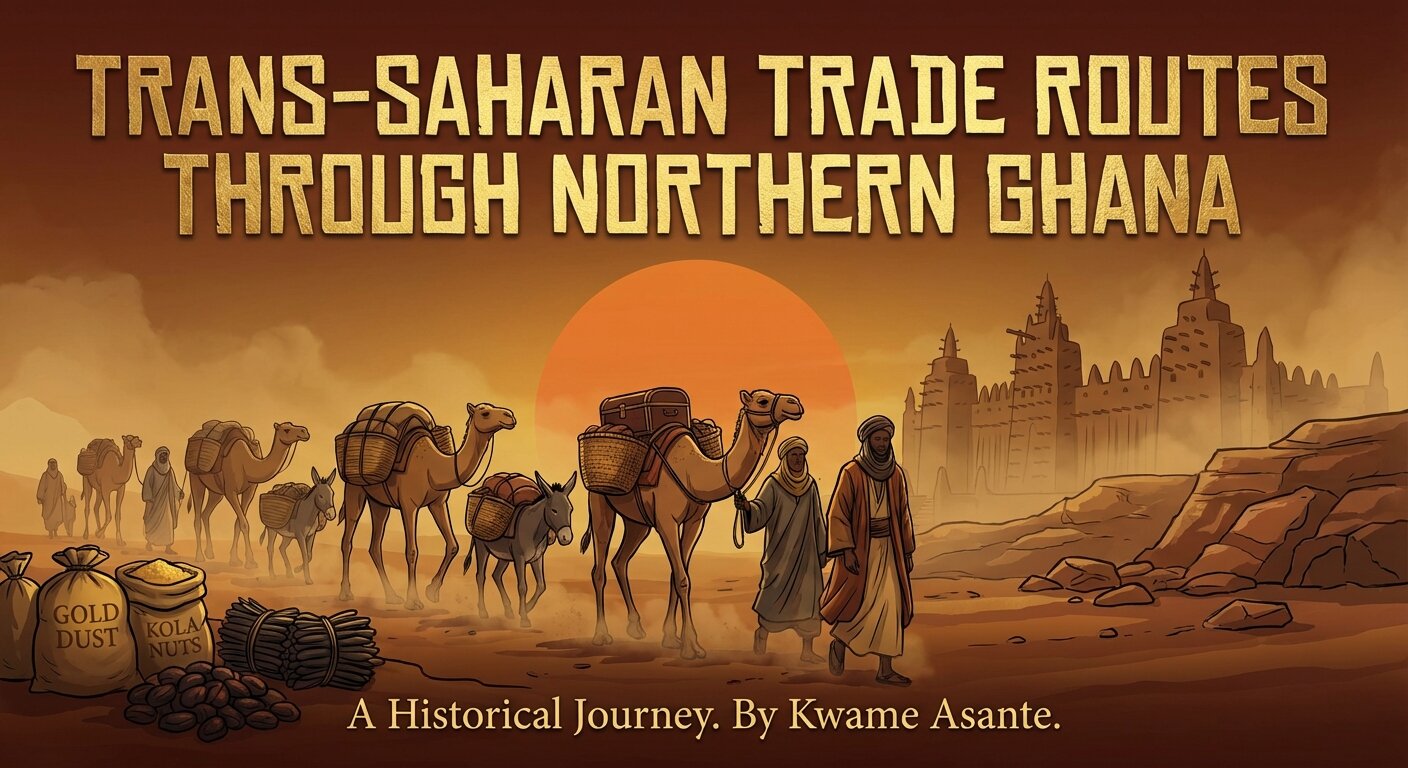
"Echoes of the Sahel" meticulously charts the rise and trajectory of the Gonja Kingdom, a powerful pre-colonial entity in Northern Ghana. The narrative begins with the arrival of the Ngbanya, a Mande-speaking group originating from the region near modern-day Mali, who, under the leadership of Jakpa Lanyo, established their dominance in the late 16th and early 17th centuries. The book details their military campaigns and strategic alliances, revealing how they subjugated and integrated diverse indigenous populations, including the autochthonous Vagala, Safalba, and other Guan-speaking peoples. A central theme explores the complex process of state formation, highlighting the blending of Mande political structures with pre-existing local governance systems. The *Kpembewura*, the most senior divisional chief, played a crucial role in integrating the land's traditional customs with the kingdom's laws. The book meticulously examines Gonja's economic prosperity, tracing its roots to the kingdom's strategic location at the crossroads of vital trade routes connecting the Akan goldfields in the south to the trans-Saharan trade networks of the Sahel. It delves into the commodities exchanged, including kola nuts, gold, salt, and slaves, and analyzes how Gonja merchants and rulers controlled and benefited from this trade. The gradual adoption of Islam, particularly among the ruling elite and merchant classes, is explored, showcasing the influence of Mande clerics and traders on Gonja society and culture. The narrative extends to the 19th century, detailing the internal conflicts and external pressures that gradually weakened the kingdom, eventually leading to its incorporation into the British Gold Coast colony. Readers will learn about the unique political structure of Gonja, the dynamics of its multi-ethnic society, and its crucial role in the economic and cultural exchange between the forest and the savanna regions of West Africa. The volume offers a nuanced understanding of Gonja's legacy and its lasting impact on the cultural landscape of Northern Ghana.
About the Author
The study of the Gonja Kingdom has benefited from the contributions of numerous historians, anthropologists, and oral tradition keepers. Early colonial administrators like A.W. Cardinall and R.S. Rattray documented aspects of Gonja history and social organization, albeit through a colonial lens. Later, scholars like Jack Goody conducted extensive anthropological research, focusing on Gonja kinship, religion, and political systems, enriching our understanding of the kingdom’s inner workings. Furthermore, the oral traditions meticulously preserved and transmitted by Gonja elders and griots – particularly through the *Jakpa* epic cycle – provide invaluable insights into the kingdom's origins, its rulers, and its interactions with neighboring groups. Modern historians like Dr. Issah Mumuni, specializing in Northern Ghanaian history, have built upon these earlier works, offering critical analyses of Gonja's political economy, its relationship with Islam, and its eventual incorporation into the colonial state.
Key Themes
- Mande migrations
- State formation
- Trade networks
- Religious syncretism
- Ethnic integration
- Colonial impact
Why This Matters
The history of the Gonja Kingdom is essential for understanding the complex tapestry of Ghanaian and African heritage. It demonstrates the ability of African societies to create sophisticated political and economic systems long before European intervention. Gonja's multi-ethnic nature offers valuable lessons about integration and governance in diverse societies -- a relevant model in contemporary Ghana and Africa.
For the diaspora, especially, the story of Gonja provides a tangible connection to pre-colonial African history, moving beyond narratives of victimhood to highlight agency, resilience, and innovation. Students can learn from Gonja's example, studying how it navigated internal tensions and external pressures, and how it forged a unique identity through the blending of different cultures and traditions. By engaging with Gonja's story, readers can gain a deeper appreciation for the richness and diversity of African history, and challenge simplistic narratives about the continent's past.
Historical and Cultural Context
The rise of the Gonja Kingdom occurred within a broader context of state formation and Islamic expansion across the West African savanna. It is contemporaneous with the ascendancy of other powerful kingdoms such as the Asante Empire to the south and the Dagomba Kingdom to the east. Studying Gonja alongside these other polities allows for a comparative analysis of statecraft, trade, and inter-group relations in pre-colonial Ghana. Within the Sankofa Library, this volume connects to materials on the Mande diaspora, pre-colonial trade routes, and the history of Islam in West Africa, further enriching the reader's understanding of this pivotal period in African history.
Sources & References
- Goody, Jack & Braimah, J.A. (1967). Salaga: The Struggle for Power. London: Longmans.
- Wilks, Ivor. (1971). The Mossi and Akan States 1500-1800. In J.F.A. Ajayi & M. Crowder (eds.), History of West Africa, Vol. 1. London: Longman.
- Braimah, J.A. & Tomlinson, H.H. (1997). History and Traditions of the Gonja. University of Calgary Press.
- Goody, Jack. (1967). The Over-Kingdom of Gonja. In D. Forde & P. M. Kaberry (eds.), West African Kingdoms in the Nineteenth Century. Oxford University Press.
- Encyclopaedia Africana. (2025). Jakpa, Sumaila Ndewura. encyclopaediaafricana.com.
- Levtzion, Nehemia. (1968). Muslims and Chiefs in West Africa. Oxford University Press.
- Johnson, Marion. (1986). The slaves of Salaga. Journal of African History, 27(2), 341-362.