Keyboard shortcuts
- J: Next chapter
- K: Previous chapter
- T: Toggle table of contents
- Shift+S: Share book
- +: Increase font size
- -: Decrease font size
- Escape: Close modals
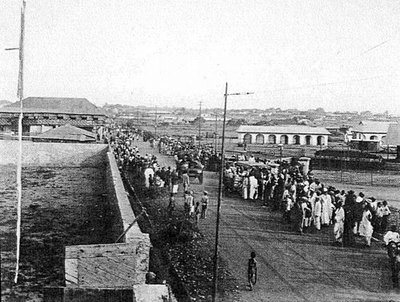
Homowo: Echoes of Survival – A Pre-Colonial Ethnography of the Ga People's Sacred Harvest Festival
- Ga people
- Homowo
- Harvest festival
- Accra
- Traditional religion
- Pre-colonial Ghana
- Famine
- Cultural preservation
- Kpoikpoi
- Wulomei
Chapter 1
The Great Famine (Nmaa Daa) and the Genesis of Homowo
The Ga people trace their origins to a great migration from Cush, through Sudan, Ethiopia, Ile-Ife in Nigeria, Benin, and Togo before settling along the coast of modern-day Greater Accra. Written history about the Ga dates to at least 1600, though oral traditions place the migration far earlier. During this long journey, the people were struck by a devastating famine, the Nmaa Daa, in which many perished. When they finally settled and planted farms, the first harvest was so bountiful that the entire community gathered to ridicule and jeer at the hunger that had nearly destroyed them. In the Ga language, "Homo" means hunger and "wo" means to hoot or jeer, and so "Homowo" literally means "hooting at hunger." The festival thus commemorates not merely survival but defiance, a communal declaration that hunger had been defeated and would never again hold power over the Ga. Daniel Tetteh Osabu-Kle of Carleton University has noted the intriguing parallel between the unleavened bread of the Ga people, called akpiti, and the unleavened bread of Jewish tradition, a connection the Ga themselves acknowledge in their oral histories. The festival became an annual harvest celebration, timed to the Ga native calendar provided yearly by the Damte Fetish Priest of the Damte Dsanwe people in the Asere Quarter of Ga Mashie. The Ga native year commences either on the last Monday of April or the first Monday of May, with the Nmaadumo sowing rite marking the beginning of the calendar and all celebrations within it.
About This Book
"Homowo: Echoes of Survival" delves into the heart of the Ga people's identity, meticulously examining the Homowo festival as more than just a harvest celebration; it is a potent symbol of resilience, spiritual renewal, and the enduring power of collective memory. The book meticulously traces the festival's origins to the harrowing famine that gripped the Ga-Dangme people during their migration and early settlement in the Greater Accra Region, specifically focusing on the experiences of the key Ga settlements of Ga Mashie, Osu, La, Teshie, Nungua, and Tema. It explores how the suffering endured during this period shaped the Ga worldview and fostered a deep appreciation for the land's bounty. The book examines the significance of key figures in Ga history, such as early Ga Mantsemei (chiefs) whose leadership guided the people through the famine, and the priests and priestesses who played crucial roles in the ritual practices associated with seeking divine intervention and ensuring future prosperity. It details the intricate rituals performed during Homowo, including the symbolic sowing of millet (Kpokpoi), the ritual sprinkling of *kpokpoi* and palm nut soup, and the communal feasting. These practices, the book argues, are not mere performances but rather a reenactment of the past hardship, a reaffirmation of communal solidarity, and a plea for continued abundance. The book pays close attention to the social organization around various clan structures that contributed to the festival. Moreover, the ethnography unravels the complex spiritual beliefs interwoven with Homowo, exploring the role of Ga deities, ancestral veneration, and the belief in the interconnectedness of the living and the dead. The reader will gain a deep understanding of the Homowo's social, economic, and political dimensions, recognizing how it serves as a crucial mechanism for reinforcing social cohesion, redistributing resources, and reaffirming Ga cultural identity in the face of external pressures. The book provides a window into the pre-colonial world of the Ga people, capturing their worldview and ways of life before the transformative impact of European contact.
About the Author
The scholarship around Homowo and Ga history is rooted in both oral traditions passed down through generations of Ga elders and in the diligent work of historians and ethnographers. Figures like the Reverend Carl Christian Reindorf, whose "History of the Gold Coast and Asante" provides valuable early insights into Ga society and culture, have been pivotal. More recent scholars, such as Marion Kilson and her seminal work on Ga social and religious life, alongside Nii Amon Kotei, a leading scholar on Ga Dangme language, traditions, and history, have built upon this foundation by conducting extensive fieldwork and archival research. The tradition of documenting Homowo involves a blend of academic rigor and community engagement, with researchers often collaborating closely with Ga elders, priests, and cultural practitioners to ensure accuracy and sensitivity in the interpretation of this sacred festival. This book is another contribution to Ga scholarship and aims to broaden the scope of pre-colonial Ga history in the digital age.
Key Themes
- Famine and survival
- Ancestral veneration
- Agricultural Rituals
- Ga Identity
- Social Cohesion
- Spiritual beliefs
Why This Matters
Understanding Homowo is crucial for grasping the resilience and cultural depth of the Ga people and, by extension, Ghanaian heritage. The festival is a living testament to the power of collective memory and the enduring ability of communities to overcome adversity. It underscores the importance of honoring ancestral traditions and maintaining cultural continuity in the face of globalization.
For the diaspora and students alike, Homowo offers a powerful connection to their roots, providing a tangible link to the rich history and cultural practices of their ancestors. By engaging with this story, readers can gain a deeper appreciation for the complexities of African history, moving beyond simplified narratives and embracing the nuanced realities of pre-colonial societies. Understanding the spiritual underpinnings of the festival provides vital insights into the worldview that shaped the Ga people and continues to inform their identity today.
Historical and Cultural Context
Homowo resonates with other harvest festivals and commemorations of survival found across the African continent. It shares similarities with the yam festivals of the Igbo people of Nigeria, which also celebrate the bounty of the land and offer thanks to the ancestors. In a broader context, Homowo demonstrates the importance of agriculture and land stewardship in African cultures, reflecting a deep connection to the natural world. Within the Sankofa Digital Heritage Library, Homowo can be connected to materials documenting other Ghanaian festivals, chieftaincy systems, and oral traditions, offering a comparative perspective on the diversity and richness of Ghanaian cultural heritage.
Sources & References
- Field, M. J. (1937). Social Organization of the Ga People. Crown Agents for the Colonies.
- Azumah, E. N. (2012). The Ga People: Their History and Culture. Sub-Saharan Publishers.
- Reindorf, C. C. (1895). History of the Gold Coast and Asante. Basel Mission Book Depot.
- Parker, J. (1995). Making the Town: Ga State and Society in Early Colonial Accra. Heinemann.