Keyboard shortcuts
- J: Next chapter
- K: Previous chapter
- T: Toggle table of contents
- Shift+S: Share book
- +: Increase font size
- -: Decrease font size
- Escape: Close modals
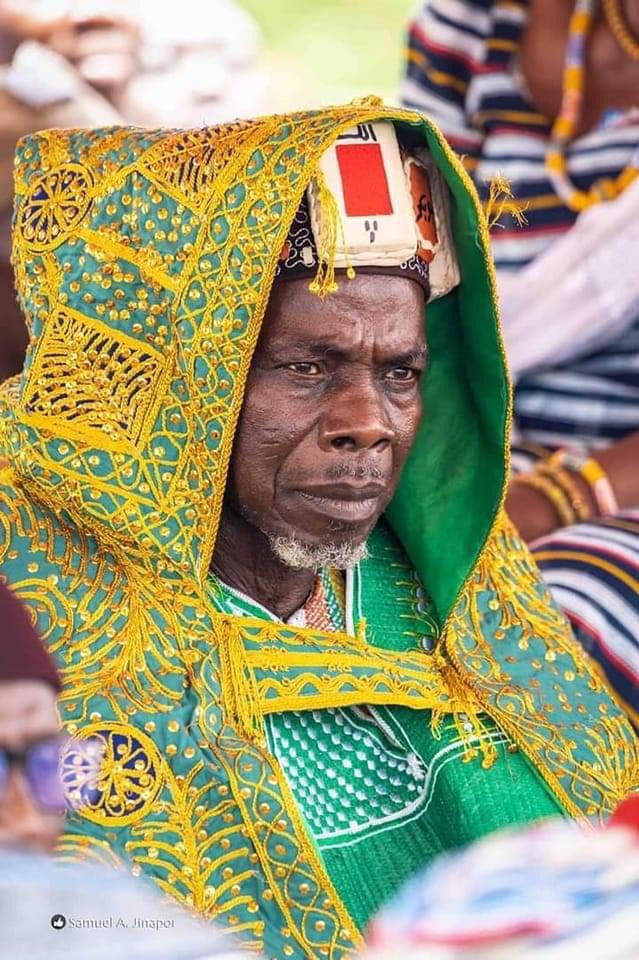
Foundations of Power: Ndewura Jakpa, Mande Incursions, and the Genesis of the Gonja Kingdom in Northern Ghana
- Gonja Kingdom
- Ndewura Jakpa
- Mande Warriors
- Northern Ghana
- Savannah Region
- Pre-colonial States
- Chieftaincy
- Oral Traditions
- Trade Routes
- Ghanaian History
- Islam in Ghana
Chapter 1
The Northern Ghanaian Landscape Before Gonja
An exploration of the diverse ethnic groups and decentralized political structures present in the Voltaic Basin prior to the Mande incursions, setting the stage for the rise of a centralized state.
About This Book
"Foundations of Power: Ndewura Jakpa, Mande Incursions, and the Genesis of the Gonja Kingdom in Northern Ghana" meticulously examines the complex origins and formative years of one of Northern Ghana's most significant pre-colonial kingdoms. It delves into the circumstances surrounding the arrival of Mande warriors, purportedly led by the enigmatic Ndewura Jakpa, and their subsequent military campaigns that laid the foundation for Gonja dominance. The book avoids simplistic narratives of conquest, instead offering a nuanced analysis of the interaction between the Mande invaders and the diverse indigenous populations they encountered, including the Nchumuru, Basari, and other Voltaic groups. Central to the narrative is the figure of Ndewura Jakpa himself. The text critically assesses the available oral traditions and limited written sources to reconstruct his role as a military leader, state-builder, and cultural icon. It analyzes the strategies Jakpa employed to consolidate power, including military alliances, strategic marriages, and the creation of a centralized administrative system that incorporated elements of both Mande and indigenous governance structures. The book also investigates the socio-political and economic transformations that accompanied the establishment of the Gonja Kingdom. It explores the development of the kingdom's economy, its reliance on agriculture, trade (particularly in kola nuts and slaves), and the evolving social hierarchy. Crucially, it examines the impact of Gonja rule on the lives of the conquered populations, highlighting both the instances of resistance and adaptation. Readers will gain a comprehensive understanding of the processes through which a new political identity -- that of the Gonja people -- was forged, and the lasting legacy of Ndewura Jakpa in shaping the cultural and political landscape of Northern Ghana. The period covered extends from the initial Mande incursions around the late 16th century, through the consolidation of power in the 17th and 18th centuries, up to the imposition of colonial rule in 1897.
About the Author
The study of Gonja history relies heavily on oral traditions, carefully passed down through generations by specialized griots and custodians of knowledge. Early European travelers and colonial administrators like Lonsdale and Cardinall documented some of these accounts, providing valuable, albeit often biased, insights. Modern scholarship builds upon this foundation, incorporating archaeological findings and linguistic analysis to corroborate and refine oral narratives. Prominent historians such as Jack Goody, Nehemia Levtzion, and Ivor Wilks have made significant contributions to understanding the broader context of Mande migrations and their impact on West African state formation. More recently, Ghanaian historians, including those at the University of Ghana and Kwame Nkrumah University of Science and Technology, have focused on the internal dynamics of the Gonja Kingdom, examining its social, economic, and political structures with greater depth and sensitivity. This book synthesizes these diverse sources, offering a contemporary perspective on the genesis of the Gonja Kingdom.
Key Themes
- Mande migrations
- State formation
- Military conquest
- Cultural synthesis
- Oral tradition
- Political centralization
Why This Matters
The story of the Gonja Kingdom is crucial for understanding the complex tapestry of Ghanaian and African heritage. It challenges simplistic narratives of ethnic homogeneity, revealing how kingdoms were often forged through conquest, assimilation, and the creation of new identities. This topic matters because it sheds light on the diverse pre-colonial political systems that flourished in West Africa, demonstrating their sophistication and resilience.
For the diaspora, engaging with this history provides a connection to the rich and complex past of the African continent, countering colonial narratives that often depicted Africa as lacking in organized societies. For students, this serves as a case study in state formation, offering valuable insights into the processes of political centralization, cultural exchange, and the enduring impact of leadership. Furthermore, understanding the Gonja Kingdom helps us appreciate the interconnectedness of West African history, revealing the long-standing interactions between different ethnic groups and the flow of people, ideas, and goods across the region.
Historical and Cultural Context
The rise of the Gonja Kingdom is part of a broader pattern of state formation in the savanna regions of West Africa during the late medieval and early modern periods. This was a period marked by increased trade across the Sahara Desert, the spread of Islam, and the emergence of powerful kingdoms such as the Asante and the Dagomba. The Mande migrations, of which the Gonja story is a part, were influenced by these dynamics, as groups sought new opportunities for trade and expansion. Within the Sankofa Library, this book connects to themes of trade networks, the spread of Islam, and the impact of migration on state formation across the continent.
Sources & References
- Wilks, Ivor. (1961). The Northern Factor in Ashanti History. Institute of African Studies, University of Ghana.
- Goody, Jack. (1967). The Over-Kingdom of Gonja. In West African Kingdoms in the Nineteenth Century, ed. Daryll Forde and P.M. Kaberry. Oxford University Press.
- Levtzion, Nehemia. (1968). Muslims and Chiefs in West Africa: A Study of Islam in the Middle Volta Basin in the Pre-Colonial Period. Clarendon Press.
- Staniland, Martin. (1975). The Lions of Dagbon: Political Change in Northern Ghana. Cambridge University Press.
- Lovejoy, Paul. (2000). Transformations in Slavery: A History of Slavery in Africa. Cambridge University Press.
- Wilks, Ivor. (1989). Wa and the Wala: Islam and Polity in Northwestern Ghana. Cambridge University Press.
- Braimah, J.A. and Goody, Jack. (1967). Salaga: The Struggle for Power. Longmans.
- Encyclopaedia Africana. (2025). Jakpa, Sumaila Ndewura. encyclopaediaafricana.com.