Keyboard shortcuts
- J: Next chapter
- K: Previous chapter
- T: Toggle table of contents
- Shift+S: Share book
- +: Increase font size
- -: Decrease font size
- Escape: Close modals

Chapter 1
Part 1
The year 1958 stands as a monument in the annals of African liberation, with Ghana, a nation barely a year independent, firmly establishing its capital, Accra, as the undisputed "Mecca of African freedom fighters." It was here, amidst the vibrant pulse of a nascent sovereign state, that the All-African Peoples' Conference, held from December 8 to December 13, 1958, convened at the Community Centre on Castle Road. This historic gathering, an audacious testament to Kwame Nkrumah's unwavering Pan-African vision, brought together over 300 delegates from 28 African countries and colonies, transforming a dream of continental unity into a tangible, strategic movement that would accelerate the end of colonial rule across the continent.
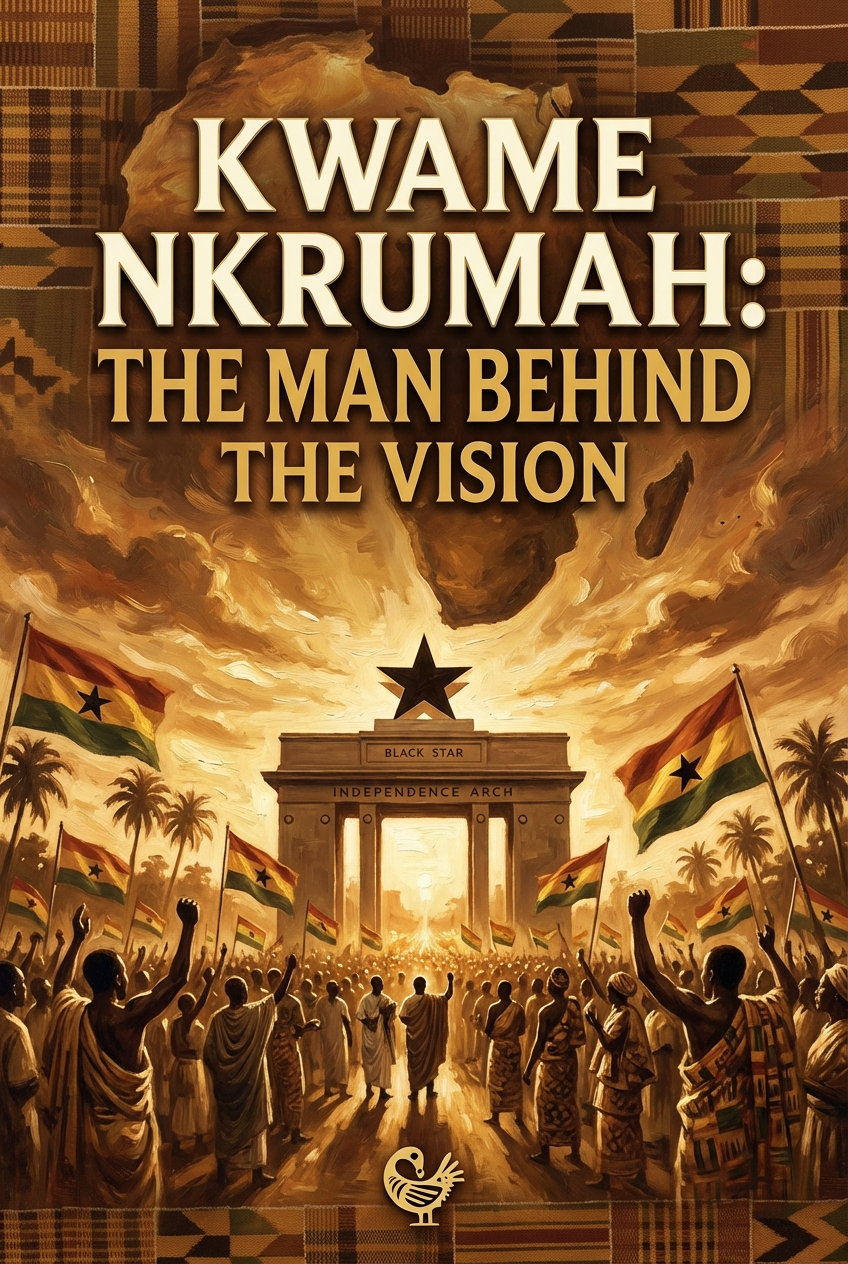
Ghana's independence on March 6, 1957, under the charismatic leadership of Osagyefo Dr. Kwame Nkrumah, had sent a seismic tremor across a continent still largely shackled by colonial rule. Nkrumah, a fervent disciple of Pan-Africanism shaped by his years in the United States and Britain alongside intellectuals like C.L.R. James and George Padmore, immediately understood that Ghana's freedom was inextricably linked to the total liberation of Africa. He famously declared at Ghana's independence ceremony, "Our independence is meaningless unless it is linked up with the total liberation of Africa." This profound conviction propelled Ghana onto the international stage as a beacon of hope and a sanctuary for freedom fighters. Less than a year after independence, in April 1958, Accra hosted the Conference of Independent African States, a groundbreaking meeting of the eight sovereign African nations of the time: Ethiopia, Egypt, Ghana, Liberia, Libya, Morocco, Sudan, and Tunisia. While significant, this gathering was primarily a meeting of governments. Nkrumah and his advisor George Padmore envisioned something far more revolutionary: a gathering of the people themselves, a continuation of the tradition begun at the 1945 Pan-African Congress in Manchester, which both men had attended.
The All-African Peoples' Conference was conceived as precisely this: not a meeting of heads of state constrained by diplomatic caution, but a gathering of liberation movements, trade unions, youth organisations, and political parties from every corner of the continent. As the historian Immanuel Wallerstein later wrote, the AAPC was the "true successor to the Pan-African Congresses." Its steering committee included representatives from Ghana, Egypt, Ethiopia, Guinea, Liberia, Libya, Morocco, Sudan, and Tunisia. The conference was open, in its own words, to "all national political parties and national trade union congresses or equivalent bodies or organizations that subscribe to the aims and objects of the conference."
About This Book
"Pan-Africanism's Home: The 1958 Accra Conference" meticulously examines the genesis, execution, and lasting impact of this watershed event. The book delves into Kwame Nkrumah's strategic vision, highlighting his unwavering belief in a unified Africa free from colonial dominance. It explores Nkrumah's calculated use of Ghana's newfound independence as a platform to champion Pan-African ideals, positioning Accra as a beacon of hope and a central hub for liberation movements across the continent. The narrative meticulously reconstructs the logistical and political complexities of organizing such a monumental gathering, bringing together a diverse range of delegates, from seasoned politicians and trade unionists to student activists and cultural figures, each representing a unique strand of the African experience. The book examines the ideological debates that unfolded during the conference, including discussions around strategies for decolonization, the role of non-violence versus armed struggle, and the future political and economic structures of a liberated Africa. Furthermore, the analysis details the significant contributions of key figures who shaped the conference's trajectory, such as George Padmore, Nkrumah's advisor on African affairs, and representatives from various liberation movements like the Algerian FLN and the South African ANC. The book underscores the conference's tangible outcomes, including the establishment of the All-African Peoples' Organization (AAPO), a permanent body dedicated to coordinating Pan-African efforts, and the Accra Declaration, a powerful statement of principles advocating for self-determination and continental unity. Readers will gain a deep appreciation for the 1958 Accra Conference as a crucial catalyst in accelerating the independence movements across Africa and setting the stage for the formation of the Organization of African Unity (OAU). This book illuminates the enduring legacy of the conference, emphasizing its continuing relevance in contemporary debates about African unity, development, and global engagement.
About the Author
The scholarship surrounding the 1958 Accra Conference is deeply rooted in the efforts of pioneering historians and political scientists like Basil Davidson and Ali Mazrui, who provided early analyses of Pan-Africanism and its impact on the continent. More recent scholarship, exemplified by the works of Richard Rathbone and David Birmingham, has delved deeper into the intricacies of Nkrumah's leadership and Ghana's role in fostering Pan-African solidarity. Critical primary sources, including the official conference proceedings and the personal papers of key figures like Nkrumah and Padmore, have been crucial in shaping our understanding of the event. These resources, coupled with oral histories from participants and observers, continue to provide valuable insights into the conference's complex dynamics and its lasting legacy. The tradition of scholarship continues to evolve, offering new perspectives on the conference's significance in the context of globalization, neo-colonialism, and the ongoing pursuit of African unity and self-determination.
Key Themes
- Pan-Africanism
- Decolonization
- African Unity
- Kwame Nkrumah's Leadership
- Ghanaian Independence
- Anti-Colonial Movements
Why This Matters
The 1958 Accra Conference is profoundly significant for understanding both Ghanaian and African heritage. It showcases Ghana's pivotal role as a champion of African liberation and unity, solidifying its place as the "Black Star of Africa." The conference epitomizes the spirit of Pan-Africanism, a movement that sought to unite Africans and people of African descent worldwide. Its relevance today lies in its enduring message of self-determination, solidarity, and the pursuit of a common African identity. Readers, particularly those in the diaspora and students, should engage with this story to understand the roots of contemporary African politics, the ongoing challenges of development and integration, and the continuing relevance of Pan-African ideals in addressing global inequalities and fostering a more just and equitable world order. It offers a vital understanding of the historical context that shapes present-day Africa and its relationship with the wider world.
Historical and Cultural Context
The 1958 Accra Conference sits within a broader historical context of Pan-Africanism, tracing its origins to the late 19th and early 20th centuries with figures like W.E.B. Du Bois and Marcus Garvey. In the Sankofa Library, this event connects to other collections highlighting anti-colonial movements across Africa, such as materials on the Mau Mau uprising in Kenya or the Algerian War of Independence. Understanding the Accra Conference also requires acknowledging the context of the Cold War, as both the United States and the Soviet Union sought to influence newly independent African nations. Further exploration of related content within the library would reveal the diverse range of perspectives and strategies employed by African leaders in their pursuit of liberation and development.
Sources & References
- Padmore, George. Pan-Africanism or Communism. Dennis Dobson, 1956.
- Wallerstein, Immanuel. Africa: The Politics of Independence. Vintage Books, 1961.
- Lumumba, Patrice. 'Speech at the All-African Peoples Conference, Accra.' December 11, 1958. (via Jean Van Lierde ed., Lumumba Speaks, 1972)
- Mboya, Tom. Freedom and After. Little Brown, 1963.
- Akyeampong, E. Themes in West Africa's History. James Currey, 2006.
- Thompson, W. Scott. Ghana's Foreign Policy, 1957-1966. Princeton University Press, 1969.
- University of Ghana Institute of African Studies. 'AAPC Background.' ias.ug.edu.gh.
- Fanon, Frantz. The Wretched of the Earth. Presence Africaine, 1961.